
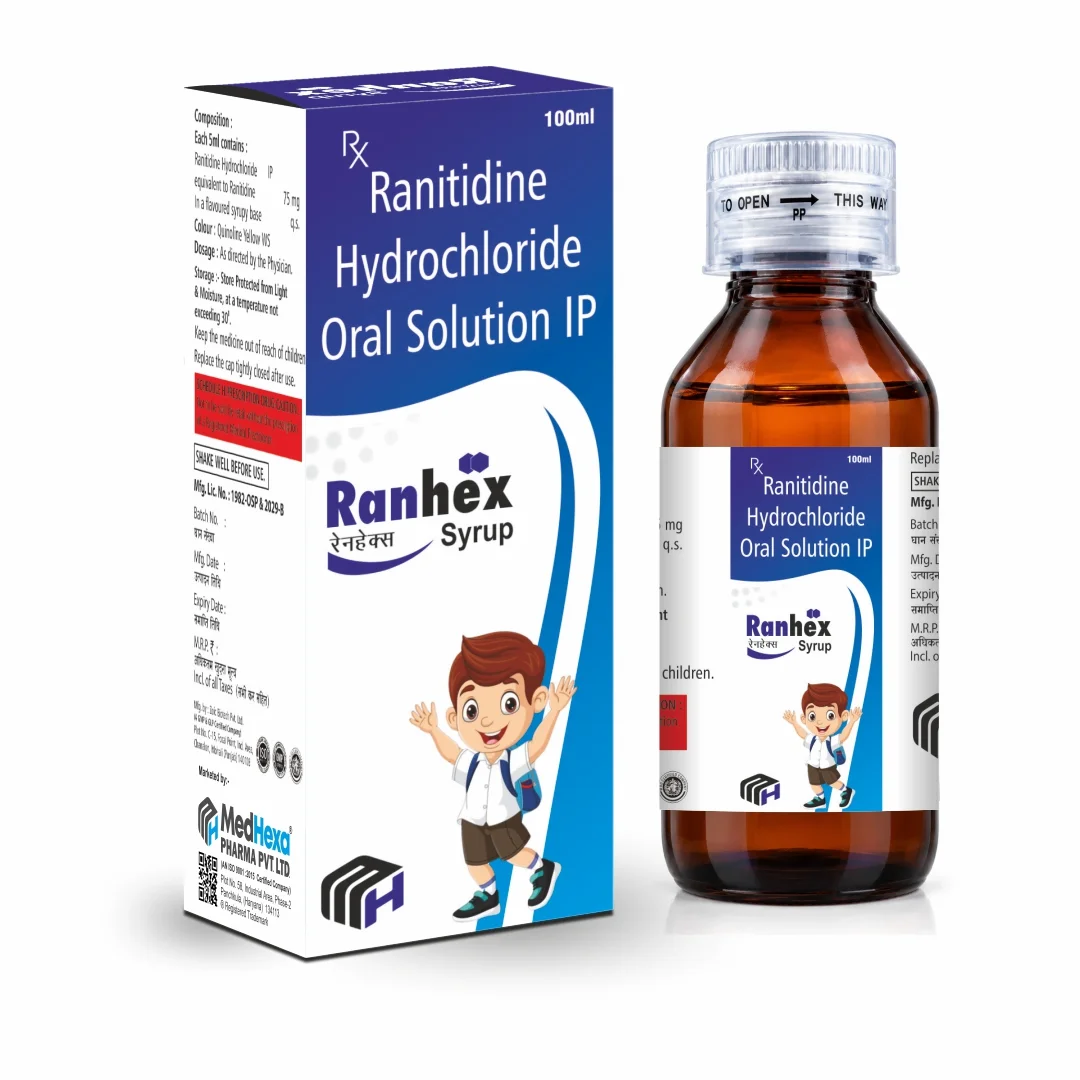
Description
RANHEX contains Ranitidine Hydrochloride I.P. 75 mg in an oral syrup formulation supplied in a 100 ML pack. Ranitidine is an H2-receptor antagonist that reduces gastric acid secretion. However, because ranitidine has been subject to regulatory action concerning the potential formation of the nitrosamine impurity NDMA, the current regulatory status and quality-control requirements for the specific RANHEX product should be verified before marketing or dispensing.
For related gastrointestinal pharmaceutical formulations, explore the Medhexa Pharma product range for additional products and therapeutic segments.
Therapeutic Segment
Gastrointestinal Care | Acid-Peptic Disorders | H2-Receptor Antagonist | Oral Syrup
Uses of RANHEX
Historically, ranitidine has been used to reduce stomach acid in conditions such as:
- Heartburn associated with excess gastric acid.
- Gastroesophageal reflux disease (GERD).
- Duodenal ulcers.
- Pathological hypersecretory conditions such as Zollinger-Ellison syndrome.
- Other acid-related gastrointestinal conditions where acid suppression was clinically appropriate.
Regulatory note: These are established historical uses of ranitidine. The suitability of RANHEX for these indications depends on the current regulatory authorization and approved prescribing information applicable to the specific product and market.
Key Benefits of RANHEX
- Contains Ranitidine Hydrochloride I.P. 75 mg.
- Ranitidine belongs to the H2-receptor antagonist class.
- Reduces gastric acid secretion by blocking histamine H2 receptors in the stomach.
- Historically used in the management of acid-related gastrointestinal conditions.
- Oral syrup formulation.
- Supplied in a convenient 100 ML pack.
How RANHEX Works
Ranitidine acts as a histamine H2-receptor antagonist. By blocking H2 receptors on gastric parietal cells, it reduces the secretion of gastric acid.
Reduced acid production can decrease acid exposure in the oesophagus and stomach and historically supported the treatment of acid-related conditions such as GERD and peptic ulcer disease.
Common Side Effects of RANHEX
Reported adverse effects associated with ranitidine have included:
- Headache
- Dizziness
- Nausea
- Constipation
- Diarrhoea
- Abdominal discomfort
More serious reactions can occur rarely. Patients should seek medical advice if they develop unusual or severe symptoms.
Important Safety Information
RANHEX requires particular regulatory and quality-control consideration because of the NDMA issue associated with ranitidine.
The U.S. FDA requested withdrawal of all ranitidine products from the U.S. market in April 2020 after testing showed that NDMA levels could increase over time and with higher temperatures.
In India, CDSCO’s July 2025 communication did not simply announce a blanket withdrawal. Instead, it directed manufacturers to monitor NDMA levels in ranitidine APIs and formulations and to take risk-based measures, including potentially reducing shelf life, following recommendations considered by the Drugs Technical Advisory Board.
Therefore:
- Verify the current Indian regulatory authorization for RANHEX before marketing.
- Verify the manufacturer’s NDMA testing and quality-control documentation.
- Follow the current approved product label and storage requirements.
- Do not use expired or improperly stored product.
- Do not self-medicate with ranitidine.
- Inform the healthcare professional about other medicines being used.
- Patients with persistent heartburn, difficulty swallowing, vomiting blood, black stools, unexplained weight loss or persistent abdominal symptoms require appropriate medical evaluation.
- Keep the product out of reach of children.
For current information about ranitidine and NDMA, refer to the FDA’s ranitidine safety information and the relevant CDSCO communication.
Dosage & Administration
The supplied product information gives the strength as Ranitidine Hydrochloride I.P. 75 mg, but it does not specify whether this strength is per 5 mL, per 10 mL or another measured volume.
Therefore, the dosage should not be calculated from the 100 ML bottle size.
Use RANHEX only according to the current approved product label and the healthcare professional’s instructions. The exact dose and frequency should depend on the patient’s age, indication, clinical condition and applicable prescribing information.
Measure the prescribed quantity using an appropriate oral measuring device rather than a household spoon.
Storage
- Store RANHEX according to the current approved product label.
- Keep the bottle tightly closed.
- Protect from excessive heat, moisture and unsuitable storage conditions.
- Follow the manufacturer’s specified storage temperature.
- Do not use after the expiry date.
- Keep out of reach of children.
- Because NDMA formation in ranitidine has been associated with storage conditions, follow the manufacturer’s storage instructions particularly carefully.