
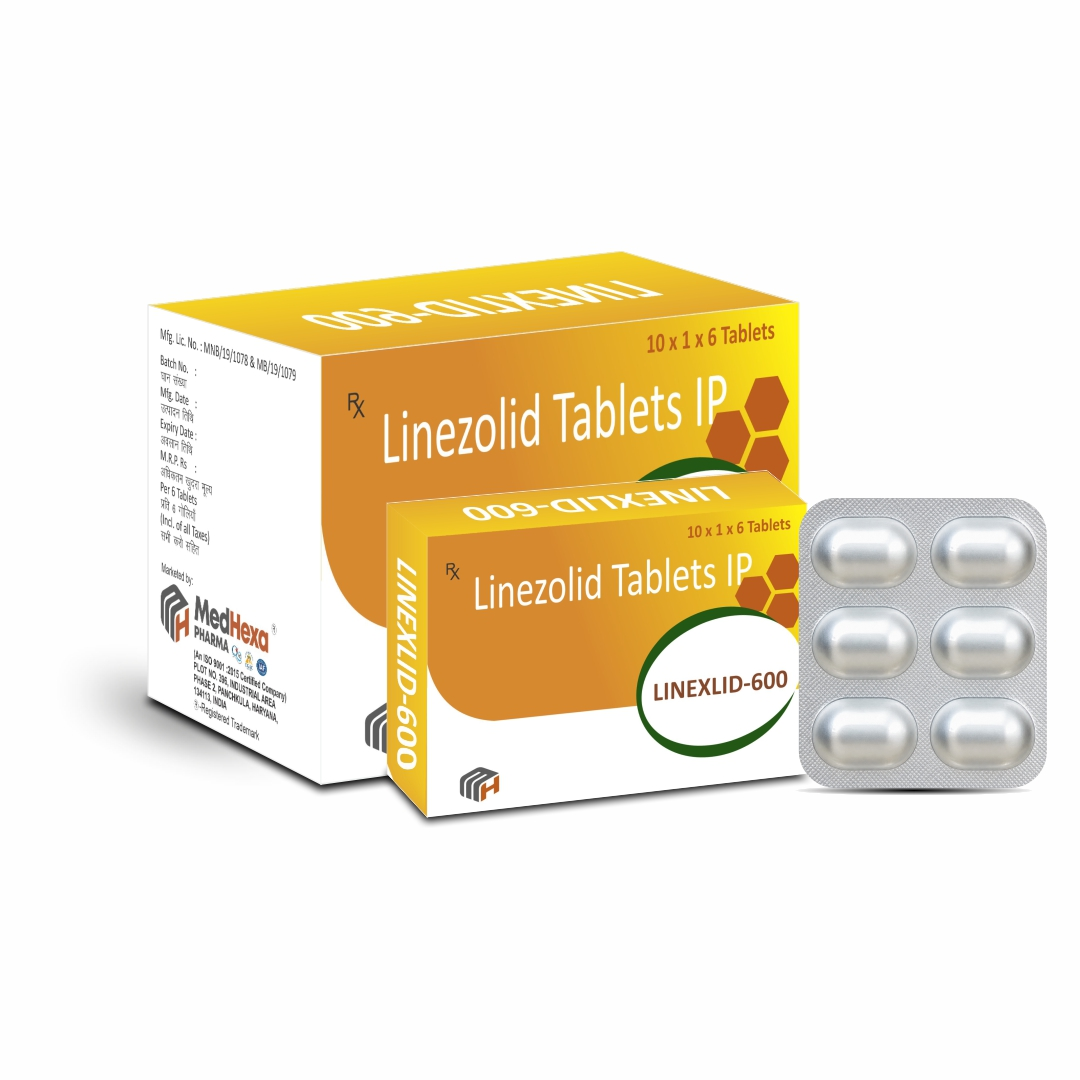
Description
LINEXLID-600 contains Linezolid I.P. 600 mg and is an oxazolidinone antibiotic used to treat certain bacterial infections caused by susceptible Gram-positive bacteria. In particular, healthcare professionals may prescribe linezolid for specific respiratory, skin and soft-tissue infections and certain infections caused by vancomycin-resistant Enterococcus faecium. (DailyMed)
For related tablet formulations and therapeutic segments, MedHexa Pharma Products can be referred to for additional product information.
Therapeutic Segment
Antibiotics | Antibacterial | Anti-Infective
Uses of LINEXLID-600
Doctors may prescribe LINEXLID-600 for certain infections caused by susceptible Gram-positive bacteria. Depending on the infection and the patient’s clinical condition, linezolid may be used for:
- Community-acquired pneumonia
- Hospital-acquired pneumonia
- Complicated skin and skin-structure infections
- Uncomplicated skin and skin-structure infections
- Certain infections caused by vancomycin-resistant Enterococcus faecium
However, linezolid does not treat viral infections such as the common cold or influenza. Therefore, patients should use this antibiotic only when a healthcare professional considers it appropriate. Appropriate antibiotic selection also helps reduce unnecessary antibiotic exposure and resistance. (DailyMed)
Key Benefits of Linezolid 600 mg
- Contains Linezolid I.P. 600 mg.
- Belongs to the oxazolidinone class of antibacterial medicines.
- Targets susceptible Gram-positive bacteria.
- Provides an oral tablet dosage form for convenient administration.
- Comes in 10 × 1 × 6 ALU-ALU packaging.
Furthermore, healthcare professionals can select linezolid based on the infection, bacterial susceptibility and the patient’s individual treatment needs.
How LINEXLID-600 Works
Linezolid acts on bacterial protein synthesis. More specifically, it binds to the 50S subunit of the bacterial ribosome and prevents formation of the functional initiation complex. As a result, susceptible bacteria cannot produce essential proteins efficiently, which limits their growth. (DailyMed)
Common Side Effects of Linezolid
Some patients may experience:
- Nausea
- Diarrhoea
- Vomiting
- Headache
- Dizziness
- Changes in taste
- Anaemia
These effects can vary from person to person. Therefore, speak with a healthcare professional if any side effect becomes severe, persistent or unusual. (DailyMed)
In addition, linezolid can cause more serious reactions in some patients. For this reason, appropriate medical supervision remains important during treatment.
Important Safety Information
Use LINEXLID-600 only according to the advice of a qualified healthcare professional.
- Linezolid can reduce blood cell counts, particularly during longer treatment courses. Therefore, doctors may monitor blood counts when clinically appropriate.
- Tell your doctor if you develop unusual bruising, bleeding, persistent weakness or other symptoms that could indicate a blood-related problem.
- Prolonged linezolid treatment can increase the risk of peripheral or optic neuropathy. Report numbness, tingling, weakness or changes in vision without delay.
- Linezolid can interact with medicines that affect serotonin levels. Therefore, inform your doctor about antidepressants, certain pain medicines and all other medicines you currently take.
- Do not use linezolid with monoamine oxidase inhibitors (MAOIs) or within the restricted period specified by your healthcare professional.
- Seek medical attention if you develop severe diarrhoea during or after antibiotic treatment.
- Tell your doctor if you have kidney or liver problems or any condition that may affect your treatment.
- Before starting treatment, provide a complete list of prescription medicines, over-the-counter products and supplements.
- Seek urgent medical care for severe allergic reactions, significant visual changes, unusual bleeding, severe diarrhoea or symptoms that may suggest serotonin syndrome.
For detailed prescribing information and important safety warnings, refer to the DailyMed Linezolid Drug Label.
Dosage & Administration
The appropriate dose and treatment duration depend on the type of infection, the patient’s age and other clinical factors. For adults and adolescents aged 12 years and older, official prescribing information commonly recommends 600 mg every 12 hours for several approved indications. However, treatment duration varies according to the infection. Therefore, take LINEXLID-600 exactly as prescribed. (DailyMed)
Swallow the tablet with water. You may take linezolid with or without food. If you miss a dose, follow your healthcare professional’s instructions rather than taking extra tablets to compensate.
Most importantly, do not change the dose, extend treatment or stop the antibiotic early unless your healthcare professional advises you to do so.
Storage
Store LINEXLID-600 in a cool, dry place away from direct sunlight and moisture. Keep the tablets in their original packaging. Also, keep the medicine out of the reach of children.