Can AI Predict What Medicine You’ll Need Next?
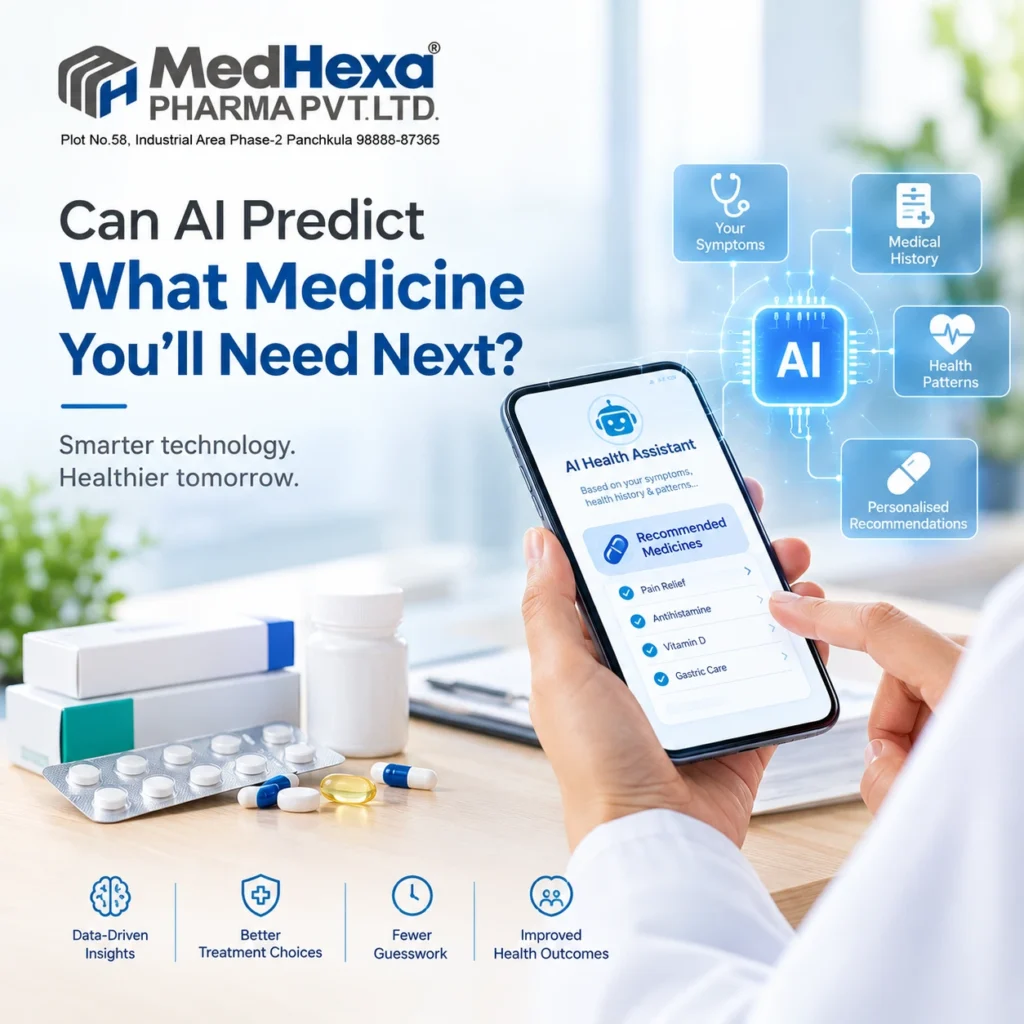
Can AI Predict What Medicine You’ll Need Next? Picture this: your doctor’s software quietly flags that your health records resemble those of people who later developed a serious illness. Nothing hurts yet and you feel fine, but the pattern is there. That scenario is moving out of science fiction and into research papers. So can AI predict diseases, and by extension the medicines you might need? The short answer is that it can estimate risk, sometimes years ahead. It cannot tell you your future, and it certainly can’t prescribe. The details matter, so here’s what the evidence shows. What “prediction” actually means here When researchers say AI “predicts” a disease, they mean it calculates a probability from patterns in large datasets. Think of it as a very sophisticated weather forecast. A 70% chance of rain doesn’t mean it will rain on you. It means that in similar conditions, it usually does. What recent research has shown One model, over 1,000 diseases. A study in Nature described an AI system that estimates risk for more than 1,000 diseases by reading entire medical histories rather than a single condition. When researchers simulated lives from age 60 onward, the model matched about 17 percent of future disease events in the first year. That’s better than the baseline, but it’s far from certainty. The authors were clear that it needs forward-looking tests, stronger regulation and training data matching local patients before routine care Pancreatic cancer, up to three years early. Mayo Clinic researchers built a model using routine health records and lab data. It was trained on 6,066 people who developed pancreatic cancer and 33,396 who didn’t. This matters because pancreatic cancer is often found late. The work was presented at a 2026 surgical congress, so treat it as promising but early. One analysis also noted an important caution: flagging risk three years out doesn’t prove patients will live longer if doctors act on it. Breast cancer risk, four to six years ahead. A Norwegian study published in a JAMA Network journal found that AI could identify women at higher risk four to six years before diagnosis, even pointing to which breast was at risk. A single blood sample. Edinburgh researchers analysed blood from more than 45,000 people and found that protein patterns could predict risk of conditions like Alzheimer’s, heart disease and type 2 diabetes up to 10 years before diagnosis. Experts say it isn’t ready for immediate use, but it’s a promising step The part most articles skip: medicines people already have Predicting a new disease is exciting, but one of the biggest real-world problems is much simpler: people don’t take the medicines they’ve already been prescribed. Even small things, like taking medicines correctly, including timing with food, affect how well a treatment works. A WHO report found that among patients with chronic diseases in developed countries, adherence averages only about 50%, and it is even lower in developing countries. For blood pressure medication specifically, only 27% of patients in Gambia, 43% in China and 51% in the United States took them as prescribed. Since high blood pressure is closely tied to cardiovascular risk, it’s worth reading our guide on heart health awareness. (The WHO report dates from 2003, but later reviews of the evidence still point to rates around 50%, with wide variation between studies.) WHO also noted that poor adherence is the primary reason medicines don’t deliver their full benefits. This is where predictive tools have a practical edge. A system that spots patients likely to miss refills or stop treatment can trigger a reminder or a pharmacist’s call before the problem grows. No breakthrough is needed, just better timing What AI cannot do Being honest about limits is what separates useful information from hype: It can’t diagnose you. A risk score is a prompt for a conversation, not a result. It can be wrong in both directions. False alarms cause anxiety and unnecessary tests, and missed cases give false reassurance. It reflects the data it learned from. A model trained on one population may perform worse on another, which matters in a country as diverse as India. It can’t weigh your whole life. Symptoms, family history, circumstances and preferences are things a clinician considers that a dataset may not capture. Your data needs protection. Health records are highly sensitive, so ask how any app or service stores and shares yours. What you can do today Don’t self-prescribe based on an app or chatbot. Medicines should be started, changed or stopped by a qualified doctor. Use AI insights as conversation starters. If a tool flags something, take it to your doctor rather than acting alone. Take prescribed medicines consistently. As the WHO numbers show, this is where many people lose the benefit of treatment. Keep up routine check-ups and screening. Prevention still depends on them. Read privacy policies before connecting health data to any app. What it means for pharma and pharmacy For the industry, the near-term opportunity is practical: helping patients stay on treatment, planning supply more accurately and speeding up research. To see the wider picture, read our overview of how AI is reshaping the pharmaceutical industry. The companies that benefit most will pair technology with strong quality systems and regulatory compliance. AI can inform decisions, but accountability still rests with people. Can AI predict diseases before symptoms appear? In research settings, yes, for some conditions and with limited accuracy. Studies have shown risk estimates years before diagnosis, but most are not yet used in routine care. Can AI tell me what medicine I’ll need in the future? No. It can estimate risk of certain conditions, but deciding on treatment is a clinical decision that requires a doctor’s assessment. Is AI accurate in healthcare? It depends on the task, the data and the population. Some tools perform well in specific uses, while others need more testing. Accuracy in one study doesn’t guarantee the same result for every patient. Is my health data safe if AI uses it?
Why Do Some Medicines Need to Be Taken Before, With, or After Food?
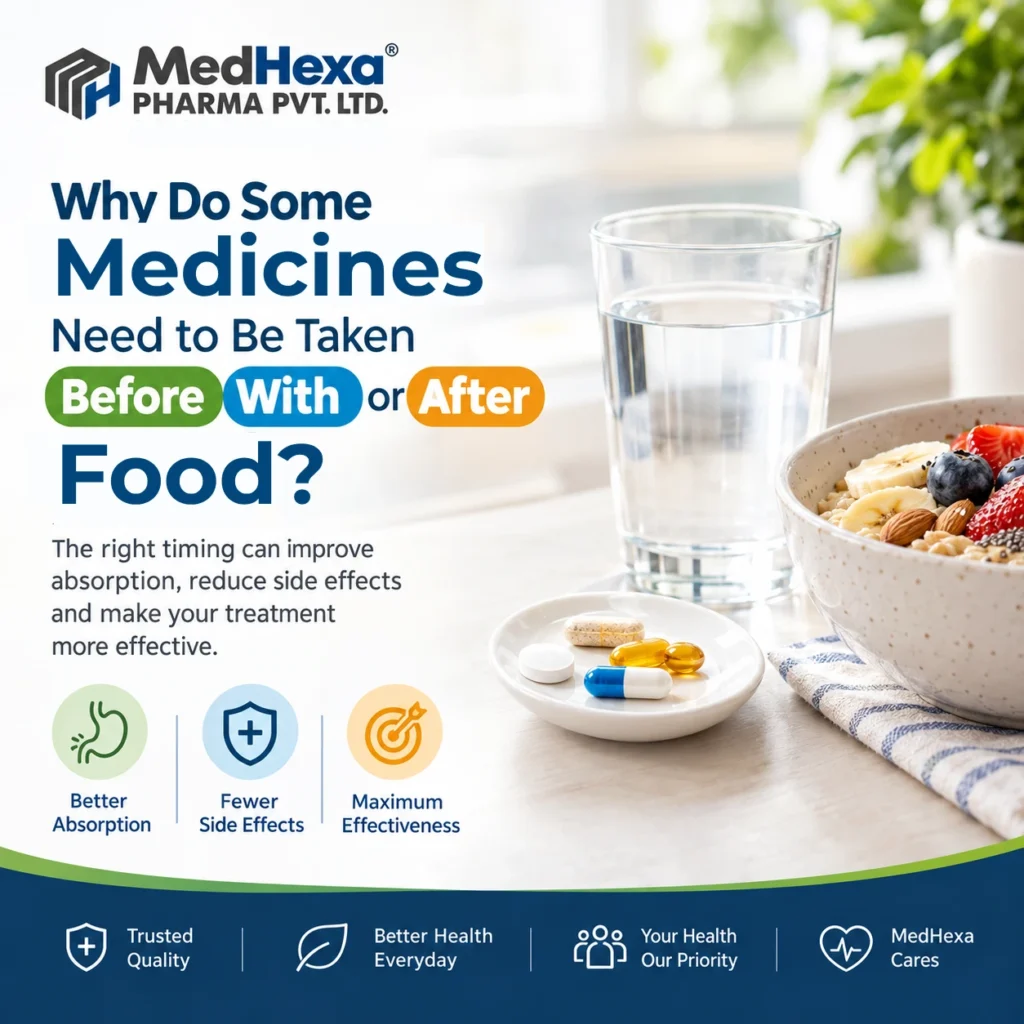
Why Do Some Medicines Need to Be Taken Before, With, or After Food? Have you ever wondered why one medicine should be taken before food, another with food, and another after food? At first, these instructions may seem like small details. However, meal timing can affect the way some medicines work in your body. A meal can change how quickly your stomach empties. It can also affect how much of a medicine your body absorbs. In some cases, eating can make a medicine easier to tolerate. That is why doctors, pharmacists, and medicine labels sometimes give specific instructions about food. Let’s look at what these instructions mean and why you should follow them. What Does Food Have to Do With Medicine? After you swallow a tablet or capsule, the medicine moves through your digestive system. The active ingredient then reaches the place where your body can absorb it. Food can influence this process. A meal may change the movement of your stomach and intestines. The amount and type of food may also affect the absorption of some medicines. The FDA studies these effects when researchers develop medicines because food can increase drug exposure, reduce it, delay absorption, or have little important effect. This explains why medicine labels sometimes include instructions such as “take before food,” “take with food,” or “take after food.” Why Are Some Medicines Taken Before Food? Some medicines work best when you take them before eating. Food may reduce absorption Certain medicines do not enter the bloodstream as well when food sits in the digestive tract. A meal can therefore reduce the amount of medicine that reaches the body. Taking the medicine before food can help avoid this problem when the medicine requires that timing. Some medicines need an empty stomach A few medicines have specific fasting instructions because food can interfere with their absorption. For example, some oral bisphosphonates have very poor absorption when food is present. Their instructions therefore require an empty stomach and a waiting period before eating. The exact timing depends on the medicine. For that reason, you should never assume that every tablet works better before breakfast. Why Are Some Medicines Taken With Food? “Take with food” is a genuine medicine instruction. Doctors may recommend it for several reasons. Food may improve stomach comfort Various medicines can cause stomach discomfort, nausea, or irritation. Taking them with food may help reduce these effects. That does not mean food makes every medicine safer. The recommendation depends on the medicine and its known effects. Food may change absorption Food can also change how much medicine enters the bloodstream. For some medicines, that change can improve the amount of medicine available to the body. In other cases, food can reduce absorption. The FDA evaluates these food effects when establishing medicine instructions. So if your medicine says “take with food,” follow that instruction rather than changing the timing yourself. Is “With Food” the Same as “After Food”? Not necessarily. The two instructions sound similar, but they can have different meanings. With food connects the medicine with a meal. After food tells you to take the medicine after eating. The correct timing depends on the medicine. You should not automatically replace one instruction with the other. The FDA recommends asking healthcare professionals whether a medicine should be taken with food, without food, before a meal, or after a meal when the instructions are unclear. Why Are Some Medicines Taken After Food? A number of medicines can cause stomach discomfort when taken without food. For those medicines, eating first may make them easier to tolerate. Your doctor or the medicine label may therefore recommend taking them after a meal. Still, this does not mean that every medicine needs food. The medicine itself determines the correct instruction. If the label says “after food,” follow that direction instead of changing the timing based on personal preference. What Does “On an Empty Stomach” Actually Mean? You may also see the phrase “take on an empty stomach.” This instruction means that food should not interfere with the medicine in the way it could during or after a meal. The timing can vary There is no single timing rule for every medicine that requires an empty stomach. One medicine may tell you to take it before breakfast. Another may require a specific gap before or after eating. Follow the instructions that come with your medicine. If the wording seems unclear, ask your pharmacist or doctor rather than guessing. Food Can Change How Much Medicine Reaches the Bloodstream One of the most important concepts behind medicine timing is drug exposure. After an oral medicine is absorbed, its active ingredient enters the bloodstream. If food increases absorption, more of the drug may become available in the body. If food decreases absorption, less may become available. Neither situation is automatically good or bad. It depends on the medicine. The FDA explains that increased exposure can potentially increase adverse effects, while decreased exposure can potentially reduce effectiveness. This is why researchers study medicines under different food conditions during drug development. The instructions eventually printed on the medicine label are based on evidence about how the drug behaves. Does the Type of Food Matter? Sometimes, yes. Food is not simply one uniform thing. A light meal and a high-fat meal can have different effects on the digestive system and therefore on the absorption of certain medicines. The FDA specifically recommends assessing high-fat meals during food-effect studies because they can produce substantial changes in gastrointestinal physiology and drug absorption. This does not mean that every medicine must be taken with a high-fat meal. It means that the composition of food can matter for some medicines. That is another reason why patients should follow the medicine-specific instructions rather than relying on general advice. What About Milk and Dairy Products? Milk is a good example of why “take it with food” does not mean “take it with any food.” Certain medicines can interact with calcium or dairy products and may not
Your Heart Doesn’t Take a Day Off. So Why Do We Ignore It?
Your Heart Doesn’t Take a Day Off. So Why Do We Ignore It? World Heart Day 2026 | Don’t Miss a Beat ❤️ Your heart keeps working every second of every day. You do not have to think about it, remind it or tell it when to beat. It simply keeps going. But when was the last time you actually stopped to think about your heart health? That is the question behind World Heart Day 2026. Observed on 29 September, World Heart Day is a global opportunity to raise awareness about cardiovascular health and encourage people to take their heart health seriously. The World Heart Federation’s 2026 campaign continues the message “Don’t Miss a Beat”, focusing on recognising cardiovascular disease signs and symptoms, protecting heart health and encouraging action. Cardiovascular disease remains the leading cause of death globally. According to the World Health Organization, cardiovascular diseases caused an estimated 19.8 million deaths in 2022, representing around 32% of all deaths worldwide. The message is simple: Pay attention before your heart has to demand your attention. World Heart Day 2026: What Does “Don’t Miss a Beat” Mean? The World Heart Day 2026 theme continues the World Heart Federation’s “Don’t Miss a Beat” campaign. The campaign focuses on recognising the signs and symptoms of cardiovascular disease, protecting heart health and encouraging action. For many people, heart health becomes a priority only after a health scare. However, cardiovascular health is something worth paying attention to long before an emergency occurs. “Don’t Miss a Beat” is therefore more than a campaign message. It is a reminder to understand your risk factors, notice unusual symptoms and make heart health part of your everyday life. Your Heart Can Be in Trouble Without Making Much Noise One of the challenges with cardiovascular disease is that some conditions can develop without obvious symptoms. The World Health Organization notes that underlying blood vessel disease may sometimes have no symptoms, and a heart attack or stroke can become the first noticeable sign. That is why awareness matters. Feeling well today does not necessarily mean that every cardiovascular risk factor is under control. Blood pressure, blood glucose, cholesterol, tobacco use, physical activity, diet and other factors can all play a role in cardiovascular health. Understanding these factors can help people have more informed conversations with qualified healthcare professionals. 5 Heart Health Warning Signs You Shouldn’t Brush Aside Knowing common warning signs does not mean trying to diagnose yourself. It means understanding when a symptom may require medical attention. 1. Chest discomfort Chest pain or discomfort, particularly in the centre of the chest, can be a warning sign of a heart attack. It may feel like pressure, squeezing, fullness or discomfort. Not every episode of chest discomfort is related to the heart, but sudden or concerning symptoms should not simply be dismissed. 2. Shortness of breath Unexplained difficulty breathing or shortness of breath can occur with cardiovascular problems. If breathing difficulty is sudden, severe or occurs together with other concerning symptoms, seek appropriate medical attention. 3. Unusual weakness, dizziness or fainting Sudden dizziness, fainting or unusual weakness can have many possible causes. However, when these symptoms occur suddenly or alongside chest discomfort, breathing difficulty or other concerning symptoms, they should not be ignored. 4. Discomfort in other parts of the body Heart attack symptoms are not always limited to the chest. The World Health Organization lists discomfort that may involve the arms, shoulder, elbows, jaw or back. This is one reason why thinking of a heart attack only as severe chest pain can cause people to overlook other possible warning signs. 5. Sudden symptoms associated with stroke Heart and vascular health is also closely connected with stroke awareness. Sudden weakness or numbness, especially on one side of the body, confusion, difficulty speaking, difficulty seeing, loss of balance or a sudden severe headache can be warning signs of stroke. These symptoms require immediate medical attention. If someone experiences symptoms that could indicate a heart attack or stroke, seek emergency medical care immediately. Heart Health Isn’t Just About Heart Attacks When people hear “heart health”, they often think only about heart attacks. Cardiovascular disease is much broader. It includes diseases affecting the heart and blood vessels, including coronary heart disease, cerebrovascular disease and other cardiovascular conditions. This means heart health should not be treated as a one-day topic.It is part of long-term health. Your blood pressure matters. Your blood glucose matters. Your cholesterol levels matter. Your activity levels matter. Your diet matters. Your tobacco exposure matters. Looking after these areas can contribute to better cardiovascular health. The Everyday Risk Factors Your Heart Notices Some cardiovascular risk factors are connected with everyday habits, while others are linked to existing health conditions. According to the World Health Organization, important behavioural risk factors include unhealthy diet, physical inactivity, tobacco use and harmful use of alcohol. These factors can contribute to raised blood pressure, raised blood glucose, abnormal blood lipids and overweight or obesity. 1. High blood pressure High blood pressure may not cause noticeable symptoms. That is why knowing your blood pressure can be important, particularly if you have risk factors or have been advised by a healthcare professional to monitor it. 2. High blood glucose and diabetes Blood glucose is another important part of cardiovascular health. People living with diabetes should follow their healthcare professional’s advice for managing their condition and associated cardiovascular risks. 3.High cholesterol High cholesterol can also contribute to cardiovascular risk. Because it may not cause obvious symptoms, appropriate testing and professional guidance can be important for people who need their cholesterol monitored. 4. Tobacco use Smoking and tobacco use are major cardiovascular risk factors. Avoiding tobacco can support better cardiovascular health. People who want to quit can speak with a qualified healthcare professional about appropriate support. 5.Physical inactivity A busy routine can make regular movement easy to postpone. However, staying physically active is an important part of maintaining cardiovascular health. The World Heart Federation’s 2026 campaign also promotes its “Keep the
How Artificial Intelligence Is Revolutionizing the Pharmaceutical Industry: Trends, Benefits & What’s Next
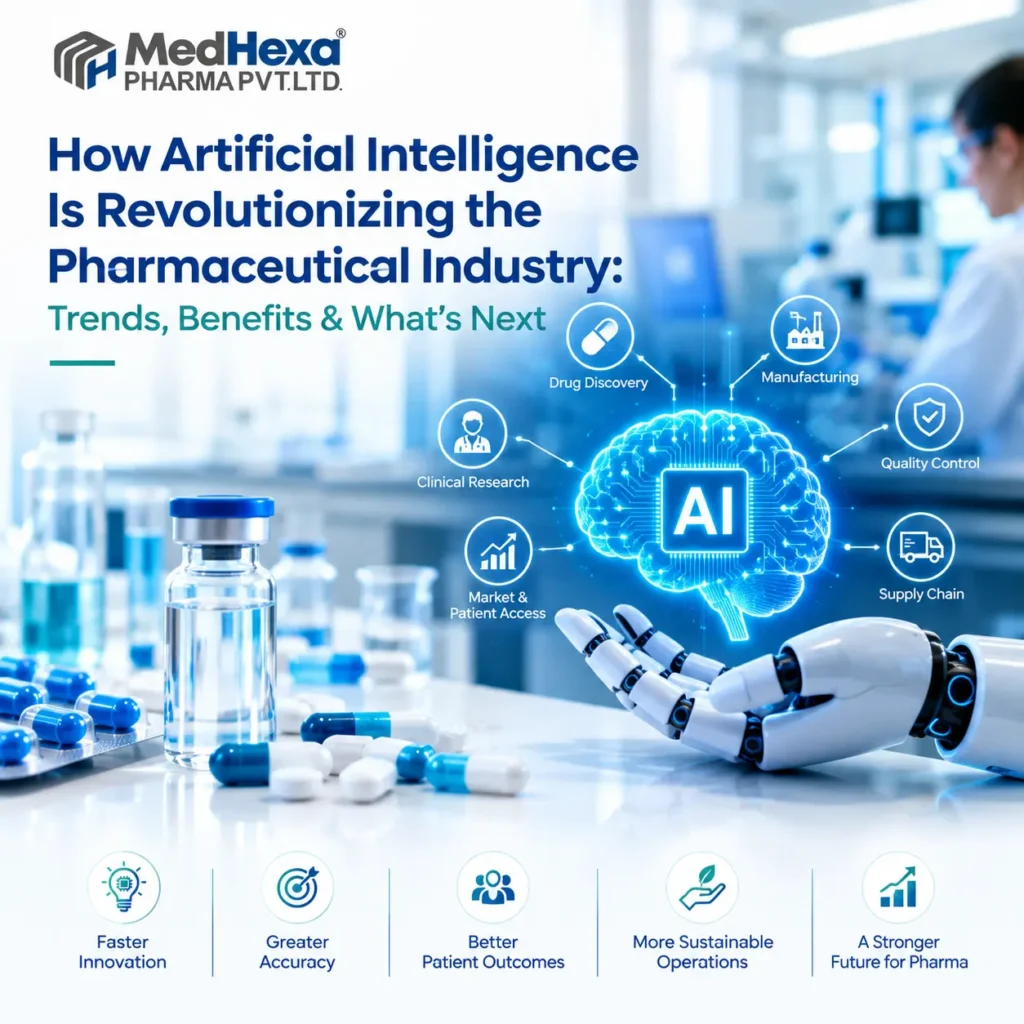
How Artificial Intelligence Is Revolutionizing the Pharmaceutical Industry: Trends, Benefits & What’s Next The pharmaceutical industry has always run on patience years of research, testing, and regulatory review standing between a promising molecule and a life-saving medicine. AI in pharma industry applications are changing that timeline fast, weaving into nearly every stage of drug development, from faster drug discovery to smarter clinical trials and treatments tailored to individual patients. Learn more about MedHexa Pharma’s approach to innovation and how we’re staying ahead of these shifts. In this article, we’ll break down exactly how AI is reshaping pharma, the technology behind it, real-world examples, the benefits companies are seeing, and what’s coming next. What Is AI’s Role in the Pharmaceutical Industry? AI in pharma uses machine learning, deep learning, natural language processing, and predictive analytics to speed up drug development – from identifying new compounds to predicting how a drug behaves in the body, long before it reaches a lab bench. Instead of slow, expensive trial-and-error, researchers now use AI models trained on massive datasets to predict which molecules are most likely to succeed. This is changing the basic economics of how medicines get made. Types of AI driving this shift: Machine learning (ML): Spots patterns to predict drug behavior. Deep learning: Powers protein structure prediction and image-based diagnostics. NLP: Scans research papers and clinical notes for insights. Generative AI: Designs new molecular structures from scratch. Key Ways AI Is Transforming Pharmaceuticals 1. Faster Drug Discovery Traditional drug discovery takes 10 to 15 years and costs over a billion dollars per drug, with most candidates failing along the way. AI platforms analyze genomic data, protein structures, and chemical libraries to find promising candidates much faster. DeepMind’s AlphaFold, which predicts protein structures accurately, has given researchers a head start on understanding disease targets. Companies like Insilico Medicine and Exscientia have moved AI designed drugs into clinical trials faster than industry norms. 2. Smarter Clinical Trials Clinical trials are often the most expensive and slowest phase of drug development. A major reason trials fail is poor patient selection or slow recruitment. AI helps by: Identifying ideal patient candidates based on genetic and health data Predicting which patients are likely to respond well to treatment Monitoring real time data during the trial to catch issues early Reducing dropout rates through better trial design and remote monitoring This saves money, speeds up approvals, and reduces the number of patients exposed to trials unlikely to help them. 3. Personalized Medicine One-size-fits-all treatment is slowly becoming a thing of the past. By analyzing a patient’s genetic profile, lifestyle data, and medical history, AI enables treatments tailored specifically to them. This is especially powerful in: Oncology: Matching cancer patients to therapies most likely to target their specific tumor genetics Rare diseases: Identifying small, scattered patient populations that would be nearly impossible to find manually Chronic disease management: Predicting how a patient will respond to a treatment before it’s prescribed 4. Predictive Drug Safety Adverse drug reactions are a leading cause of clinical trial failure and post-market drug withdrawals. Machine learning models can now flag potential toxicity, side effects, and drug interactions earlier in development by analyzing molecular structure and historical safety data. This reduces costly failures in late-stage trials or after a drug reaches the market. 5. Smarter Manufacturing AI is transforming the pharma factory floor as much as the research lab. Predictive maintenance models flag equipment issues before they cause downtime. Computer vision systems catch defects during production that human inspectors might miss. Real-time quality monitoring ensures batch consistency at scale, reducing waste and recalls. 6. Drug Repurposing AI can quickly scan existing approved drugs, already proven safe in humans, to identify new potential uses for different conditions. Because these drugs have already cleared safety testing, repurposing brings treatments to patients far faster than developing something entirely new. This approach proved especially valuable during recent global health emergencies, when speed was critical 7. AI-Powered Drug Design (Generative Chemistry) Perhaps the most futuristic application is generative AI, which can design entirely novel molecules optimized for specific properties like binding affinity, stability, and low toxicity, rather than just screening existing compound libraries. This flips the traditional discovery process on its head, moving from “search and test” to “design and verify. Benefits of AI in Pharma Industry Adoption Speed: Reduces years off the drug development timeline Cost savings: Lowers R&D expenses by minimizing trial-and-error and failed candidates Accuracy: Improves prediction of drug efficacy and safety before human trials begin Personalization: Enables precision medicine at scale, matching treatments to patients Innovation: Opens doors to treatments for complex diseases once considered too costly or difficult to pursue Accessibility: Lower development costs can eventually translate to more affordable treatments Challenges Still Facing AI in Pharma It’s not all smooth sailing. The industry still faces real obstacles: Regulatory uncertainty: Agencies like the FDA are still developing clear frameworks for evaluating AI-driven drug discovery and AI-based diagnostic tools Data privacy and security: Patient data used to train AI models must be handled with strict compliance to regulations like HIPAA and GDPR Data quality and bias: AI models are only as good as the data they’re trained on biased or incomplete datasets can lead to flawed predictions Integration challenges: Many pharma companies still run on legacy systems that aren’t built to work seamlessly with modern AI tools Trust and interpretability: Researchers and regulators need to understand why an AI model made a prediction, not just accept the output blindly What’s Next for AI in Pharmaceuticals? Looking ahead, expect to see: Deeper generative AI integration for designing novel molecules from scratch Wider adoption of AI-powered diagnostics that catch diseases earlier and more accurately Increased collaboration between traditional pharma giants and AI-first biotech startups Maturing regulatory frameworks as agencies build clearer guidelines for AI-assisted drug approval AI-driven clinical trial design becoming standard practice rather than the exception As these pieces come together, AI is expected to move from a “nice-to-have” innovation to a core pillar of
Pharmacists and Wellness: The Connection Between Medicines and Healthy Living
Pharmacists and Wellness: The Connection Between Medicines and Healthy Living Pharmacists and Wellness are closely connected through the safe and responsible use of medicines. They help patients understand their medicines, follow dosage instructions and make informed decisions about their health. In addition, their role goes beyond dispensing medicines to supporting medication safety, health awareness and responsible medicine use. Every year, World Pharmacists Day highlights the contribution of pharmacists to healthcare and communities around the world. In 2026, the International Pharmaceutical Federation (FIP) has announced the theme “Empowering pharmacists for healthier futures.” The theme focuses on the role pharmacists can play in prevention, access to care, medicine use and stronger health systems. What Is World Pharmacists Day? World Pharmacists Day is observed every year on 25 September. The day recognizes the contribution pharmacists make to healthcare and raises awareness about their role in supporting patients and communities. Pharmacists work in different healthcare settings, including community pharmacies, hospitals, research organizations and other healthcare services. Their responsibilities can include dispensing medicines, providing medicine-related information and supporting patients with appropriate medicine use. In addition, pharmacists can contribute to health education and prevention activities. Their role continues to develop as healthcare needs change. Pharmacists and Wellness: The Connection With Healthy Living Healthy living involves more than eating well and staying physically active. Responsible medicine use is also an important part of personal health. Pharmacists and Wellness come together when pharmacists help people understand how to use medicines correctly. They can explain dosage instructions, answer medicine-related questions and provide information about safe use. For example, a patient may have questions about when to take a medicine or whether it should be taken with food. In such situations, clear guidance can help the person understand the instructions better. Furthermore, pharmacists can direct patients to a doctor or another healthcare professional when a health concern requires further assessment. 1. Pharmacists Help People Understand Their Medicines People can use a medicine appropriately when they understand what doctors or healthcare professionals prescribe or advise them to take. Questions may arise about: When should the medicine be taken? Should it be taken with food? How should a liquid medicine be measured? How should the medicine be stored? What should be done if a dose is missed? Are there important precautions to know about? People can use a medicine appropriately when they understand what doctors or healthcare professionals prescribe or advise them to take. In addition,WHO identifies pharmacists as healthcare professionals who can contribute to safer medication practices, including appropriate dispensing, patient education and monitoring. 2.How Pharmacists Support Medication Safety Medication safety is an important part of healthcare. Medicines can provide significant benefits when people use them correctly, but errors can occur at different stages of the medication-use process. The WHO Medication Without Harm initiative highlights the need for safer medication practices across prescribing, dispensing, administration and monitoring. Patients, caregivers and healthcare professionals all have a role in improving medication safety. Pharmacists can support this process by checking prescriptions, providing medicine information and helping patients understand how to use their medicines. As a result, better communication between patients and healthcare professionals can support safer medicine use. For more information, visit WHO’s Medication Without Harm initiative. 3. Pharmacists and Health Awareness Pharmacists can also contribute to health awareness in their communities. People often have questions about common health concerns, medicines and general wellness. Pharmacists can provide appropriate medicine-related information and, when necessary, recommend that patients seek further medical advice. For example, pharmacists may help people understand the importance of following treatment instructions. They can also encourage patients to discuss persistent or concerning symptoms with a qualified healthcare professional. Moreover, pharmacists can support health education and prevention activities in some healthcare settings. WHO has highlighted areas such as health education, screening and vaccination as examples of services pharmacists may provide in different countries. 4. Pharmacists and Chronic Health Conditions Many people live with health conditions that require long-term treatment. For these patients, medicines may become part of their everyday routine. Pharmacists can play a role in supporting appropriate medicine use and helping patients understand their treatment. WHO/Europe notes that pharmacists in many settings increasingly provide pharmaceutical care services that help patients manage longer-term chronic illnesses. For example, a person managing a long-term condition may have questions about: maintaining a regular medicine schedule understanding instructions managing multiple medicines possible medicine-related concerns when to contact their doctor The pharmacist can be one part of the healthcare team supporting that process. 5. Healthy Living Also Means Using Medicines Responsibly Healthy living is often associated with nutrition, exercise, sleep and stress management. However, responsible medicine use also deserves attention. Taking medicines without proper guidance can create unnecessary risks. Therefore, people should follow the instructions provided by their doctor, pharmacist or other qualified healthcare professional. Patients should also avoid changing the dose or stopping a prescribed medicine without appropriate medical advice. For example, if a person experiences an unexpected problem while taking a medicine, discussing the issue with a healthcare professional can help determine the appropriate next step. WHO also emphasizes the importance of patients being informed about their medicines and understanding their treatment Pharmacists, Medicines and Patient Awareness One of the most valuable connections between pharmacy and wellness is health literacy. People who understand their medicines are better positioned to follow appropriate instructions and recognize when they need professional advice. Pharmacists can help explain medicine-related information in a way that is easier for patients to understand. This becomes particularly useful when medicine instructions, dosage forms or treatment schedules are unfamiliar. For example, tablets, capsules, syrups, suspensions and other dosage forms may have different instructions for use. The correct method depends on the specific product. Therefore, patients should not assume that two medicines with similar names or ingredients can automatically be used in exactly the same way. Why Medicine Quality and Responsible Supply Matter Medicine quality is another important part of healthcare. People depend on medicines that meet appropriate standards for quality, safety and effectiveness. WHO explains that
How to Start a Successful PCD Pharma Franchise Business in India
How to Start a Successful PCD Pharma Franchise Business in India The pharmaceutical industry offers promising business opportunities for entrepreneurs, distributors and professionals. However, setting up a pharmaceutical manufacturing unit requires significant investment, infrastructure and technical expertise. As a result, many people choose the PCD pharma franchise model instead. A PCD pharma franchise allows you to promote and distribute pharmaceutical products under an established company’s brand. The pharma company manages manufacturing and product supply, while the franchise partner focuses on developing the local market. However, success does not come simply from purchasing products. You also need to understand your territory, select suitable products and build strong business relationships. Therefore, choosing the right company and following a clear business strategy can make a significant difference. This guide explains how to start a successful PCD pharma franchise business in India step by step. What Is a PCD Pharma Franchise? PCD stands for Propaganda Cum Distribution. In this business model, a pharmaceutical company authorises a franchise partner to promote and distribute its products within an agreed territory. The company generally handles product manufacturing, packaging and supply. Meanwhile, the franchise partner develops the market and generates business within their area. Depending on the company and agreement, franchise partners may receive: Pharmaceutical products Product catalogues Visual aids Promotional materials Marketing support Business guidance Monopoly rights in selected areas As a result, entrepreneurs can enter the pharmaceutical sector without establishing their own manufacturing facility. Nevertheless, every company follows its own franchise policies. Therefore, always understand the business terms before making an investment. Why Start a PCD Pharma Franchise Business in India? A PCD pharma franchise can provide an opportunity to build a business in the healthcare sector. Pharmaceutical products continue to be required across cities, towns and different regions of India. Furthermore, the franchise model can offer a lower entry barrier compared with establishing a manufacturing company. Lower Investment Than Manufacturing A pharmaceutical manufacturing facility requires expensive machinery, infrastructure and technical resources. On the other hand, a franchise partner can work with products supplied by an established company. Opportunity to Develop Your Own Market You can focus on building your presence within a selected territory. Over time, consistent market development can help you expand your business. Access to an Existing Product Portfolio Instead of developing new products, franchise partners can work with an existing pharmaceutical portfolio. Marketing Support Many companies also provide promotional materials. These resources can help partners present products professionally in their local market. Monopoly Opportunities Some pharma companies provide monopoly rights for selected territories. However, availability and terms depend on the company’s franchise policy. Step 1: Understand the PCD Pharma Franchise Business Model Before starting, understand how the PCD pharma franchise business works and what your responsibilities will be. Learn about product supply, marketing support, franchise terms and territory rights. A clear understanding of the business model will help you make better decisions and avoid problems later. Step 2: Research Your Local Market Study your local pharmaceutical market before selecting products or a company. Check the competition, product demand, doctors, clinics, hospitals and medical stores in your area. Good market research helps you choose products that have better potential in your territory. Step 3: Plan Your Investment and Documents Prepare a realistic budget based on your product requirements and business plans. Complete the required licences, registrations and business documents before starting operations. Proper financial planning and documentation will help you build your pharma business on a strong foundation. Step 4: Choose the Right PCD Pharma Company Select a reliable pharmaceutical company by checking its product range, quality standards, pricing and product availability. Also, ask about marketing materials, business support and monopoly rights for your preferred territory. Choosing the right company can make a significant difference to your long-term growth. Step 5: Select Products and Grow Your Market Choose pharmaceutical products according to the demand in your local market. Manage your inventory carefully and focus on building strong professional relationships. With consistent marketing, regular follow-ups and reliable service, you can gradually grow your PCD pharma franchise business. Why Choose MedHexa Pharma for a PCD Pharma Franchise? Choosing a reliable business partner can influence your long-term growth. MedHexa Pharma offers pharmaceutical products and PCD pharma franchise opportunities for entrepreneurs and businesses looking to establish themselves in the healthcare sector. The company provides opportunities related to: Broad pharmaceutical product portfolio Quality-focused products Marketing support Monopoly rights opportunities in selected territories PCD pharma franchise opportunities Third-party pharmaceutical manufacturing Moreover, a diverse product portfolio can help franchise partners select products according to their local market requirements. Before starting, you can contact MedHexa Pharma to discuss current territory availability, product options and business requirements. Start Your PCD Pharma Franchise Business With MedHexa Pharma If you are planning to start a PCD pharma franchise business in India, selecting the right business partner is an important first step. MedHexa Pharma can help you explore opportunities related to pharmaceutical products and PCD franchise business development. You can enquire about: PCD Pharma Franchise Opportunities Product Portfolio Monopoly Rights Marketing Support Product Availability Third-Party Manufacturing What is a PCD pharma franchise? A PCD pharma franchise is a business model where a pharmaceutical company authorises a partner to promote and distribute its products within an agreed territory. How much investment is required? Investment depends on factors such as the company, product range, territory and business scale. Are monopoly rights available? Some pharmaceutical companies offer monopoly rights for selected territories. However, availability and terms should always be confirmed before starting. Can beginners start a PCD pharma franchise? Yes. Beginners can explore this business model. However, they should understand their market, complete applicable documentation and choose a reliable pharma company. How can I grow my PCD pharma business? Focus on market research, suitable product selection, professional relationships, stock management and consistent business development. A PCD pharma franchise is a business model where a pharmaceutical company authorises a partner to promote and distribute its products within an agreed territory. Investment depends on factors such as the company,
Vitamin D3 60K: Understanding Vitamin D Supplementation and Bone Health
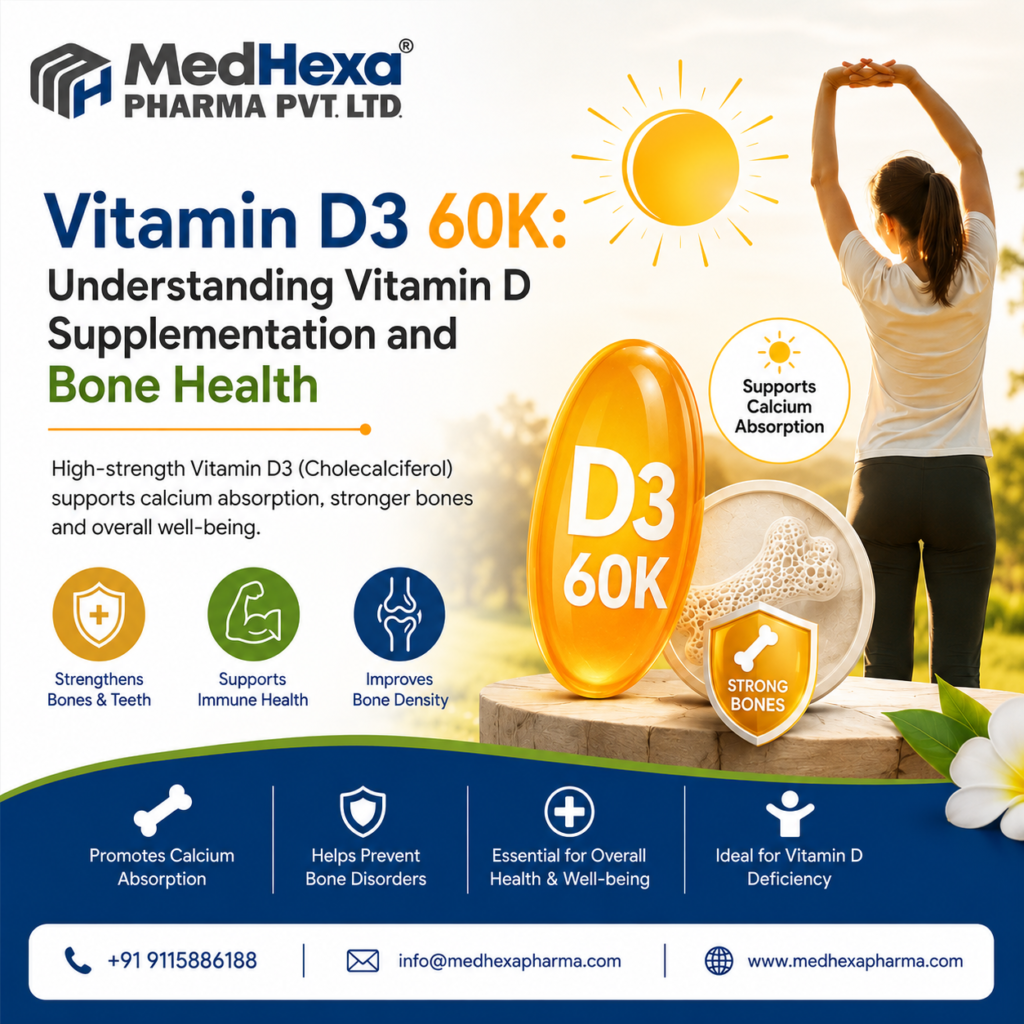
Vitamin D3 60K: Understanding Vitamin D Supplementation and Bone Health Vitamin D plays an important role in maintaining healthy bones, muscles and normal calcium metabolism. It helps the body absorb calcium and phosphorus, which are essential nutrients for maintaining normal bone structure and mineralisation. When vitamin D levels are inadequate, the body may not be able to use calcium efficiently. Severe or prolonged deficiency can contribute to bone-related problems such as rickets in children and osteomalacia in adults. One of the commonly prescribed high-strength formulations is Vitamin D3 60K, which contains 60,000 IU of Vitamin D3, also known as cholecalciferol. Vitamin D3 60K products are available in different dosage forms, including oral solutions, nano shots and softgel capsules. However, Vitamin D3 60K is a high-dose formulation and should not be treated like an ordinary daily multivitamin. The appropriate dose and frequency depend on an individual’s vitamin D status, age, health condition and healthcare professional’s recommendation. For pharmaceutical businesses, Vitamin D3 60K is also an important product category within the bone-health and nutritional-care segment. MedHexa Pharma offers CALHEX-D3, a Vitamin D3 (Cholecalciferol I.P. 60,000 IU) Sugar-Free Nano Shot designed for the pharmaceutical market. [CALHEX-D3 Vitamin D3 60K Product Page] What Is Vitamin D3 60K? Vitamin D3 60K refers to a formulation containing 60,000 International Units (IU) of Vitamin D3. Vitamin D3 is also known as cholecalciferol. It is one of the major forms of vitamin D used in supplements and pharmaceutical products. Vitamin D has several important functions in the body. Its best-known role is supporting calcium absorption and bone health. It also contributes to normal muscle function and helps maintain normal levels of calcium and phosphorus. Vitamin D status is commonly assessed using a blood test for 25-hydroxyvitamin D [25(OH)D]. It is important to understand that a high-strength Vitamin D3 formulation is not automatically appropriate for everyone. A 60,000 IU product may be used in specific clinical situations, particularly when a healthcare professional determines that high-dose supplementation is appropriate. Therefore, consumers should not assume that Vitamin D3 60K should be taken every day. Why Is Vitamin D Important for Bone Health? Bones are living tissues that continuously undergo formation and breakdown. Several nutrients contribute to maintaining normal bone structure, including calcium, phosphorus and vitamin D. Vitamin D supports the body’s ability to absorb calcium from the digestive tract. Calcium, in turn, is essential for maintaining normal bones and teeth. When vitamin D levels remain low for a prolonged period, calcium absorption may be affected. In severe deficiency, this can contribute to poor bone mineralisation. In children, significant vitamin D deficiency can lead to rickets, a condition in which developing bones can become soft and weak. In adults, severe deficiency can contribute to osteomalacia, which involves impaired mineralisation of bone and may be associated with bone pain or muscle weakness. This makes adequate vitamin D an important part of maintaining overall bone health. However, vitamin D supplementation should be appropriate to the individual’s needs. Taking more vitamin D does not necessarily provide greater bone-health benefits. Vitamin D3 60K Uses Vitamin D3 60K may be used when a healthcare professional determines that high-dose vitamin D supplementation is clinically appropriate. Some situations in which vitamin D supplementation may be considered include: Vitamin D deficiency Nutritional rickets Osteomalacia associated with vitamin D deficiency Increased risk of vitamin D deficiency Situations where a healthcare professional recommends high-strength vitamin D supplementation Supporting correction of inadequate vitamin D status The exact dosage schedule can vary depending on the individual’s clinical condition. Vitamin D3 60K should therefore be used according to professional medical advice rather than as a self-prescribed daily supplement. Vitamin D3 60000 IU and Bone Health The relationship between vitamin D and bone health is closely connected to calcium metabolism. Vitamin D helps the body absorb calcium, while calcium provides an important structural component of bones. A simplified way of understanding the relationship is: Vitamin D → Supports Calcium Absorption → Supports Bone Mineralisation → Helps Maintain Bone Health When vitamin D deficiency is present, correcting the deficiency may be important for maintaining normal bone health. However, bone health depends on much more than vitamin D alone. Other factors include: Adequate calcium intake Protein and overall nutrition Physical activity Muscle strength Healthy body weight Age Hormonal health Smoking and alcohol habits Existing medical conditions Certain medications For this reason, Vitamin D3 60K should be considered as one part of appropriate nutritional or clinical management when indicated. Vitamin D3 60K and Calcium Absorption Calcium is one of the most important minerals for bones and teeth. The body needs vitamin D to support efficient absorption of calcium from the intestine. If vitamin D status is inadequate, calcium absorption may be reduced. This is one reason why vitamin D and calcium are often discussed together in relation to bone health. Foods that can contribute calcium to the diet include: Milk Curd and yoghurt Cheese Calcium-fortified foods Certain green leafy vegetables Other calcium-containing foods A balanced diet can help provide essential nutrients, while vitamin D supplementation may be recommended when dietary intake or vitamin D status is inadequate. Individuals with nutritional concerns should speak with a healthcare professional about their specific dietary and supplementation requirements. What Is Vitamin D Deficiency? Vitamin D deficiency occurs when the body does not have enough vitamin D to maintain normal physiological functions. Vitamin D can come from sunlight exposure, food and supplements. Several factors can influence vitamin D status, including: Limited exposure to sunlight Spending significant amounts of time indoors Older age Darker skin pigmentation Limited dietary intake Certain gastrointestinal conditions Problems affecting nutrient absorption Obesity Certain medications Vitamin D deficiency may not always produce obvious symptoms. When deficiency becomes significant, some people may experience symptoms such as: Bone discomfort Muscle weakness Fatigue Reduced physical strength Increased risk of bone-related problems These symptoms are not specific to vitamin D deficiency and can occur with many other conditions. Proper evaluation is therefore important. Who May Need Vitamin D Supplementation? confirmed or suspected deficiency, certain
Monsoon Digestive Health: Acidity, Gas & Enzyme Support
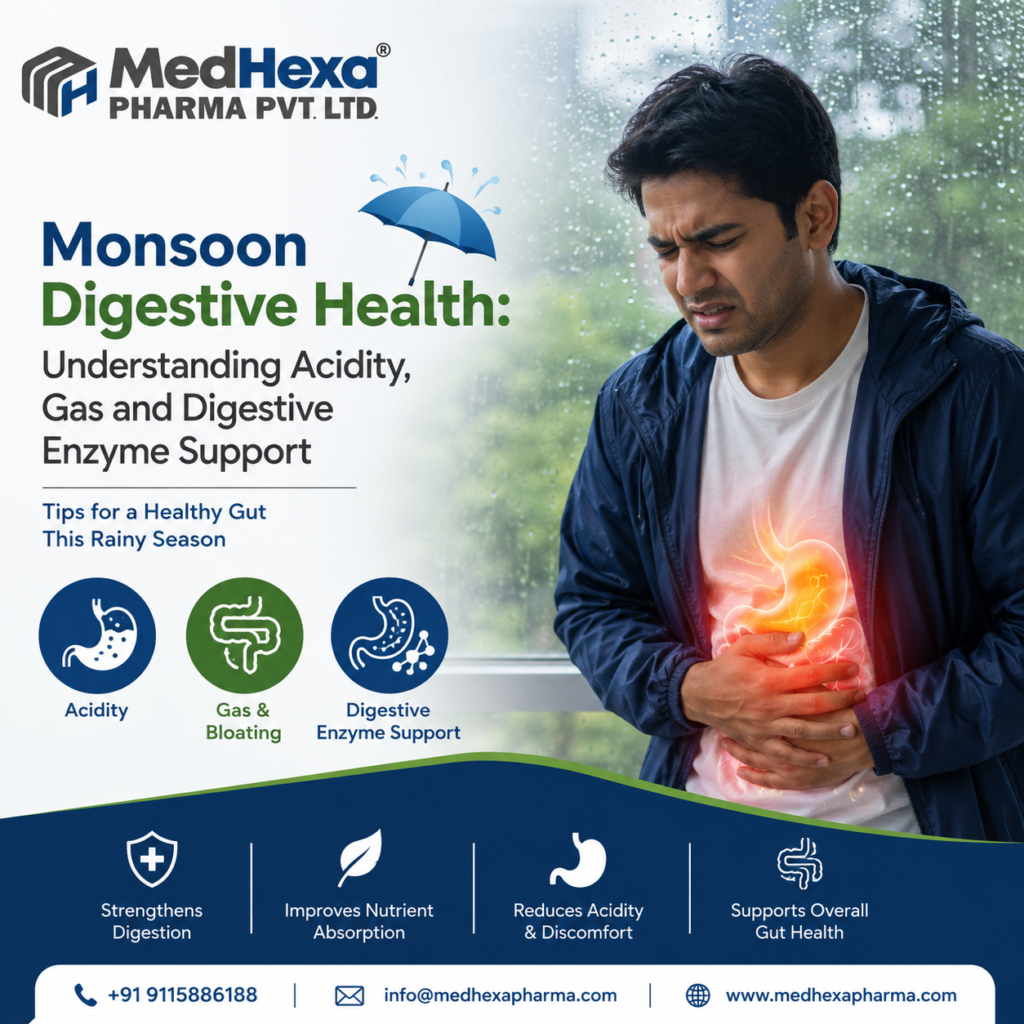
Monsoon Digestive Health: Understanding Acidity, Gas and Digestive Enzyme Support The monsoon season brings much-needed relief from the heat, but it can also affect digestive health. Many people experience acidity, gas, bloating, heaviness after meals, and indigestion during this time. Changes in eating habits, increased humidity, and consumption of oily or outside food are some of the common reasons behind these digestive problems. Understanding these issues can help maintain better digestive health throughout the rainy season. Why Digestive Problems Increase During Monsoon During monsoon, the digestive system may become more sensitive due to several factors: Eating fried and spicy foods more frequently Consuming street food Irregular meal timings Reduced physical activity Drinking unsafe or contaminated water Increased humidity affecting food freshness These factors can disturb normal digestion and lead to acidity, gas, and indigestion. What Is Acidity? Acidity occurs when excess stomach acid causes discomfort in the upper digestive tract. Common Symptoms of Acidity Burning sensation in the chest or upper abdomen Sour taste in the mouth Discomfort after spicy or oily meals Nausea or uneasiness Acidity may become more noticeable during monsoon because people often consume heavier and more oily foods. What Causes Gas and Bloating? Gas forms naturally during digestion, but excessive gas can cause discomfort. Common Symptoms Abdominal fullness Bloating Burping Flatulence Tightness in the stomach Eating too quickly, overeating, and consuming certain foods can increase gas formation. Acidity vs Gas: Understanding the Difference Although acidity and gas can occur together, they are not the same condition. Acidity Gas / Bloating Related to stomach acid Related to gas in the digestive tract Burning sensation is common Fullness and pressure are common May cause sour belching May cause excessive burping Often triggered by spicy food Often triggered by heavy meals What Is Indigestion? Indigestion is a general term for discomfort after eating. Symptoms of Indigestion Heaviness after meals Early fullness Bloating Mild stomach pain Loss of appetite Indigestion is especially common when meals are irregular or difficult to digest. Understanding Digestive Enzyme Support Digestive enzymes help break down carbohydrates, proteins, and fats so the body can absorb nutrients properly. When digestion becomes sluggish, some people may experience: Heaviness after meals Bloating Indigestion Feeling uncomfortable after eating Digestive enzyme support refers to formulations that contain enzymes designed to assist the digestive process when recommended by a healthcare professional. Foods That Commonly Trigger Acidity and Gas During Monsoon ❌ Deep-fried snacks ❌ Very spicy food ❌ Excess tea or coffee ❌ Carbonated drinks ❌ Heavy late-night meals ❌ Stale or uncovered food Foods That Support Better Digestion ✅ Freshly cooked home food ✅ Rice and dal ✅ Khichdi ✅ Boiled vegetables ✅ Soups ✅ Curd if tolerated MedHexa Products for Digestive Health Support During monsoon, people often look for support for acidity, gas, bloating, and indigestion. MedHexa Pharma offers products in the digestive health category that are relevant to these common seasonal digestive concerns. HEXCID – Support for Acidity and Gas For acidity and gas-related discomfort, HEXCID is part of MedHexa Pharma’s digestive care range. 🔗 HEXCID HEXCID contains Magaldrate and Simethicone and is available as a sugar-free mint-flavoured syrup. It is included in MedHexa’s digestive health category and may be considered for acidity and gas support under professional medical guidance. HEXZYME – Digestive Enzyme Support For people who experience heaviness after meals, indigestion, or bloating, HEXZYME is included in MedHexa Pharma’s digestive enzyme range. 🔗 Product Link: HEXZYME HEXZYME is a digestive enzyme syrup containing Fungal Diastase and Pepsin and is available in a 200 ml pack. How to Choose High-Demand Pharma Products for PCD Franchise? Selecting products based only on the word “high demand” is not enough. Before finalizing your product portfolio, consider these factors. Eat Fresh Food Choose freshly prepared meals and avoid stale or uncovered food during the rainy season. Drink Safe Water Stay hydrated with clean and safe drinking water to support healthy digestion. Eat on Time Regular meal timings can help reduce acidity, heaviness, and indigestion. Support Digestion Use digestive health products only under the guidance of a qualified healthcare professional. Why do digestive problems increase during the monsoon season? Digestive problems may become more common during monsoon due to changes in food habits, increased humidity, irregular meal timings, and consumption of oily or outside food. What is the difference between acidity and gas? Acidity is usually related to excess stomach acid and may cause a burning sensation, while gas is related to air or gas in the digestive tract and may cause bloating, fullness, and burping. What are the common symptoms of acidity? Common symptoms include heartburn, a sour taste in the mouth, discomfort after meals, and a burning sensation in the upper abdomen or chest. What causes gas and bloating during monsoon? Gas and bloating can be caused by overeating, eating too quickly, consuming heavy foods, carbonated drinks, and digestive disturbances. What is digestive enzyme support? Digestive enzyme support refers to formulations that contain enzymes that help break down carbohydrates, proteins, and fats to support the digestive process. Digestive problems may become more common during monsoon due to changes in food habits, increased humidity, irregular meal timings, and consumption of oily or outside food. Acidity is usually related to excess stomach acid and may cause a burning sensation, while gas is related to air or gas in the digestive tract and may cause bloating, fullness, and burping. Common symptoms include heartburn, a sour taste in the mouth, discomfort after meals, and a burning sensation in the upper abdomen or chest. Gas and bloating can be caused by overeating, eating too quickly, consuming heavy foods, carbonated drinks, and digestive disturbances. Digestive enzyme support refers to formulations that contain enzymes that help break down carbohydrates, proteins, and fats to support the digestive process. Frequently Asked Questions (FAQs) Looking for the Best Pharmaceutical Company in North India? Partner with Medhexa Pharma Pvt. Ltd. for premium-quality pharmaceutical products, dependable supply, and professional business support. 📞 Talk to a Franchise Expert Conclusion Monsoon can increase
High Demand Pharma Products for PCD Franchise
High Demand Pharma Products for PCD Franchise (2026) High-Demand Pharma Products for PCD Franchise can play an important role in building a sustainable pharmaceutical distribution or franchise business in India. For a new entrepreneur, choosing the right products is often just as important as choosing the right pharma company. A strong product portfolio should ideally cover healthcare categories with regular market requirements, suitable formulations, reliable availability and competitive pricing. Depending on the territory and customer base, products such as nutritional supplements, pediatric formulations, gastrointestinal products, pain-management medicines, anti-allergic products, gynecology products and other therapeutic categories may offer opportunities for pharma franchise partners. However, there is no single product that is guaranteed to sell everywhere. Demand can vary by location, prescribing patterns, competition, season and the type of customers you serve. In this guide, we will discuss high-demand pharma products for PCD franchise, important product categories, how to select products, and what to look for when choosing a pharmaceutical company for your business. What Are High Demand Pharma Products for PCD Franchise? High-demand pharma products are medicines, healthcare products or nutritional formulations that have the potential for regular market requirements. For a PCD franchise business, useful products generally have characteristics such as: Regular healthcare demand Multiple potential customer segments Suitable product formulations Competitive pricing Reliable availability Good product quality Repeat-order potential Appropriate packaging Proper regulatory compliance The exact demand of a product should always be evaluated according to the local market rather than assuming that a product will perform equally well across India. Why Product Selection Matters in a PCD Pharma Franchise Choosing the right products can influence several parts of your business. 1. Market Acceptance Products that address common healthcare requirements may be easier to introduce to pharmacies, clinics and healthcare professionals. 2. Repeat Orders Products used regularly can create opportunities for repeat purchasing when the product is accepted in the market. 3. Product Portfolio Growth A diverse portfolio allows a franchise partner to serve different healthcare segments rather than depending on a single product. 4. Better Customer Coverage A broader range can help distributors approach different pharmacies, clinics and healthcare professionals. 5. Long-Term Business Development The goal should not simply be to sell one product. A sustainable PCD business depends on building relationships, maintaining availability and developing a balanced product portfolio. Top 20 High-Demand Pharma Products for PCD Franchise Below are 20 important pharma product categories for PCD franchise that entrepreneurs can consider when building their product portfolio. These are categories and opportunities, not a guaranteed sales ranking. Actual demand depends on the territory, competition, healthcare needs and applicable regulations. 1. Multivitamin and Multimineral Products Multivitamin and multimineral products are commonly included in pharmaceutical and wellness portfolios. They may include combinations of vitamins, minerals, antioxidants and other nutritional ingredients. Why consider this category? Broad consumer interest Multiple age groups Different formulation options Opportunities for repeat purchases Medhexa’s portfolio includes products such as LYTOHEX-PLUS and MEXVITAMIN. 2. Calcium and Vitamin D3 Products Calcium and Vitamin D3 products are another important category for pharmaceutical distributors. They may be positioned for nutritional support related to bone and mineral health, depending on the formulation and approved indications. Possible formulations include: Calcium tablets Calcium + Vitamin D3 Calcium syrups Combination nutritional products This category can be particularly relevant when building pediatric, women’s healthcare and general wellness portfolios. 3. Pediatric Healthcare Products Pediatric products can be an attractive segment for franchise businesses because children’s healthcare includes multiple product categories. These may include: Pediatric syrups Dry syrups Pediatric drops Nutritional formulations Digestive products Medhexa’s current product categories include paediatric suspension, pediatric drops and dry syrups. When selecting pediatric products, entrepreneurs should pay close attention to approved age indications, formulations, labeling and appropriate professional guidance. 4. Iron and Folic Acid Products Iron-based nutritional products are commonly included in women’s healthcare and nutritional portfolios. Examples of formulations can include: Iron + folic acid Ferrous ascorbate + folic acid Iron + multivitamin combinations Medhexa’s product portfolio includes FEROHEXA-XT, listed as an iron supplement containing ferrous ascorbate with folic acid. This category can complement a broader women’s healthcare or nutritional product range. 5. Protein and Nutritional Supplements Protein and nutritional products can be useful additions to a broader healthcare portfolio. For example, Medhexa’s product card lists 1-PROTENMEX, containing protein, iron, calcium, multivitamins and multiminerals. Potential customers may include: Adults Families Nutritional-care customers Healthcare professionals Product positioning should always follow the approved product labeling and applicable regulations. 6. Digestive Healthcare Products Digestive healthcare is another broad category that can be considered by pharma franchise partners. Common product types include: Digestive enzymes Antacid-related formulations Gastrointestinal products Probiotic products Digestive syrups Medhexa’s portfolio includes HEXZYME, listed as a digestive enzyme formulation containing fungal diastase and pepsin. How to Choose High-Demand Pharma Products for PCD Franchise? Selecting products based only on the word “high demand” is not enough. Before finalizing your product portfolio, consider these factors. 1. Study Your Local Market Demand can differ significantly between cities, states and individual territories. Research: Local pharmacies Clinics Hospitals Doctors Existing competitors Product availability Pricing 2. Look for Repeat-Purchase Potential Products that are regularly required may offer better opportunities for repeat orders than products with very limited demand. However, repeat sales depend on actual patient needs, professional recommendations and market acceptance. 3. Check Product Availability Even a good product can become difficult to sell if stock is inconsistent. Ask the pharma company about: Stock availability Dispatch timelines Minimum order requirements Delivery coverage Replacement policies 4. Compare Pricing Pricing matters for both the distributor and the retailer. Before choosing a product, compare: Purchase price Retail price Competitor pricing Packaging Product composition Market demand Don’t select products based on margin alone. 2. Look for Repeat-Purchase Potential Products that are regularly required may offer better opportunities for repeat orders than products with very limited demand. However, repeat sales depend on actual patient needs, professional recommendations and market acceptance. How to Choose High-Demand Pharma Products for PCD Franchise? Selecting products based only on the word “high demand” is not enough.
Top 20 Best Iron Syrups for Kids in India (2026)
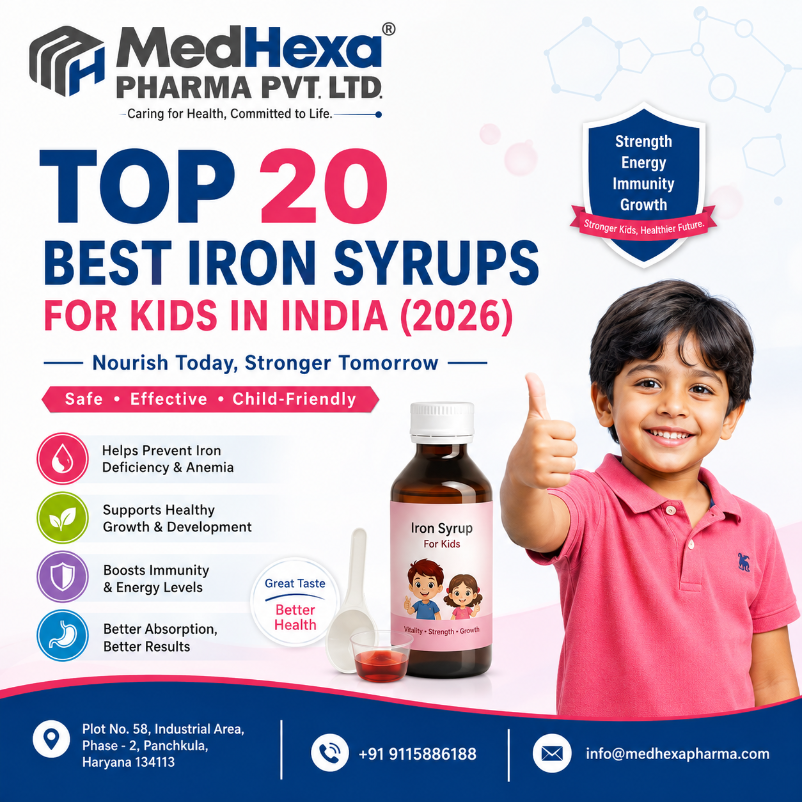
Best Iron Syrups for Kids in India (2026 Guide): Top 20 Picks Best Iron Syrups for Kids in India are widely used to support children’s nutritional needs, especially when their diet does not provide enough iron. Iron is an essential mineral that helps in the production of hemoglobin, supports oxygen supply in the body, and plays an important role in children’s growth and development. Growing children require adequate iron for healthy brain development, energy levels, and overall well-being. In some cases, pediatricians may recommend iron supplements such as syrups to help maintain normal iron levels. With many options available in the market, choosing the right iron syrup for kids can be confusing for parents. This guide covers the best iron syrups for kids in India (2026), their benefits, important ingredients, and factors parents should consider before selecting an iron supplement for children. Why Do Kids Need Iron Syrups? Iron is an important nutrient required for normal childhood growth. It helps the body produce hemoglobin, a protein responsible for carrying oxygen to different parts of the body. Children may require additional iron support during: Rapid growth periods Poor dietary intake Increased nutritional requirements Certain health conditions A balanced diet containing green leafy vegetables, pulses, dairy products, eggs, and meat can provide iron. However, when dietary intake is insufficient, doctors may suggest supplements like pediatric iron syrups. Signs of Iron Deficiency in Children Iron deficiency is one of the common nutritional concerns among children. Some possible signs include: Tiredness and low energy Pale skin Reduced appetite Difficulty concentrating Weakness Irritability Slow physical development If parents notice these symptoms, they should consult a healthcare professional before starting any supplement. Top 20 Best Iron Syrups for Kids in India (2026) Choosing the best iron syrups for kids in India depends on factors such as iron composition, child’s age, nutritional needs, and doctor’s recommendation. Below are commonly used types of pediatric iron syrups: 1. Ferrous Ascorbate Iron Syrups Ferrous ascorbate is a popular form of iron used in many pediatric supplements. It is often combined with vitamin C because vitamin C helps improve iron absorption. Benefits: Supports normal hemoglobin formation Helps meet children’s iron requirements Suitable for pediatric nutritional support 2. Iron + Folic Acid Syrups Iron and folic acid combinations are commonly used to support blood formation. Benefits: Supports red blood cell production Helps maintain nutritional balance Provides essential nutrients during growth years 3. Iron Polymaltose Complex Syrups Iron polymaltose complex is designed to provide iron supplementation with good tolerability. Benefits: Gentle iron source Helps support iron levels Suitable for children as advised by doctors 4. Ferrous Sulphate Syrups Ferrous sulphate is another commonly used iron preparation. Benefits: Provides elemental iron Supports normal iron intake Helps manage nutritional iron deficiency 5. Iron + Multivitamin Syrups These syrups combine iron with vitamins and minerals. Benefits: Supports overall nutrition Helps children with increased nutritional needs Provides multiple nutrients in one supplement Different Types of Iron Syrups Available for Children Parents may find different iron formulations in the market: Ferrous Ascorbate Syrup Often preferred because vitamin C improves iron absorption. Ferrous Sulphate Syrup A traditional iron formulation used for supplementation. Iron Polymaltose Complex Syrup Known for better stomach tolerance in many children. Benefits of Best Iron Syrups for Kids in India The best iron syrups for kids in India may provide several nutritional benefits when used according to medical advice. Supports Healthy Hemoglobin Levels Iron helps in the production of hemoglobin, which carries oxygen throughout the body. Supports Energy and Activity Adequate iron levels help children maintain normal energy levels. Supports Growth and Development Iron contributes to normal cognitive and physical development during childhood. Helps Fulfill Nutritional Gaps Iron supplements may help children who are unable to get enough iron through diet alone. Best Medicine Storage Tips Everyone Should Follow Proper medicine storage is simple and can help maintain the quality and effectiveness of medicines until they are needed. Follow these practical tips: Store medicines in a cool, dry place away from heat and humidity. Keep medicines in their original packaging until use. Close bottles and containers tightly after every use. Keep medicines away from direct sunlight. Store medicines out of reach of children and pets. Check expiry dates regularly and safely dispose of expired medicines. Read and follow the storage instructions printed on the medicine label. Avoid exposing medicines to unnecessary temperature changes. Do not mix different medicines in the same container. If refrigeration is required, follow the manufacturer’s instructions carefully and avoid freezing medicines unless specifically directed. These simple habits can help preserve medicine quality and reduce the risk of accidental damage caused by improper storage. 1. What are the best iron syrups for kids in India? The best iron syrups for kids in India depend on the child’s age, nutritional needs, and doctor’s recommendation. Common formulations include ferrous ascorbate, ferrous sulphate, and iron polymaltose complex syrups. 2. Can children take iron syrup daily? Iron syrup should be given according to the dosage recommended by a pediatrician. 3. What is the right age for iron syrup? The suitable age depends on the child’s nutritional requirements and medical advice. 4. Does iron syrup improve appetite in kids? Iron supplements may help children with iron deficiency-related issues, but appetite improvement varies from child to child. 5. How should iron syrup be stored? Most iron syrups should be stored in a cool, dry place away from direct sunlight. Always follow label instructions. The best iron syrups for kids in India depend on the child’s age, nutritional needs, and doctor’s recommendation. Common formulations include ferrous ascorbate, ferrous sulphate, and iron polymaltose complex syrups. Iron syrup should be given according to the dosage recommended by a pediatrician. The suitable age depends on the child’s nutritional requirements and medical advice. Iron supplements may help children with iron deficiency-related issues, but appetite improvement varies from child to child. Most iron syrups should be stored in a cool, dry place away from direct sunlight. Always follow label instructions. Frequently Asked Questions (FAQs)