

Description
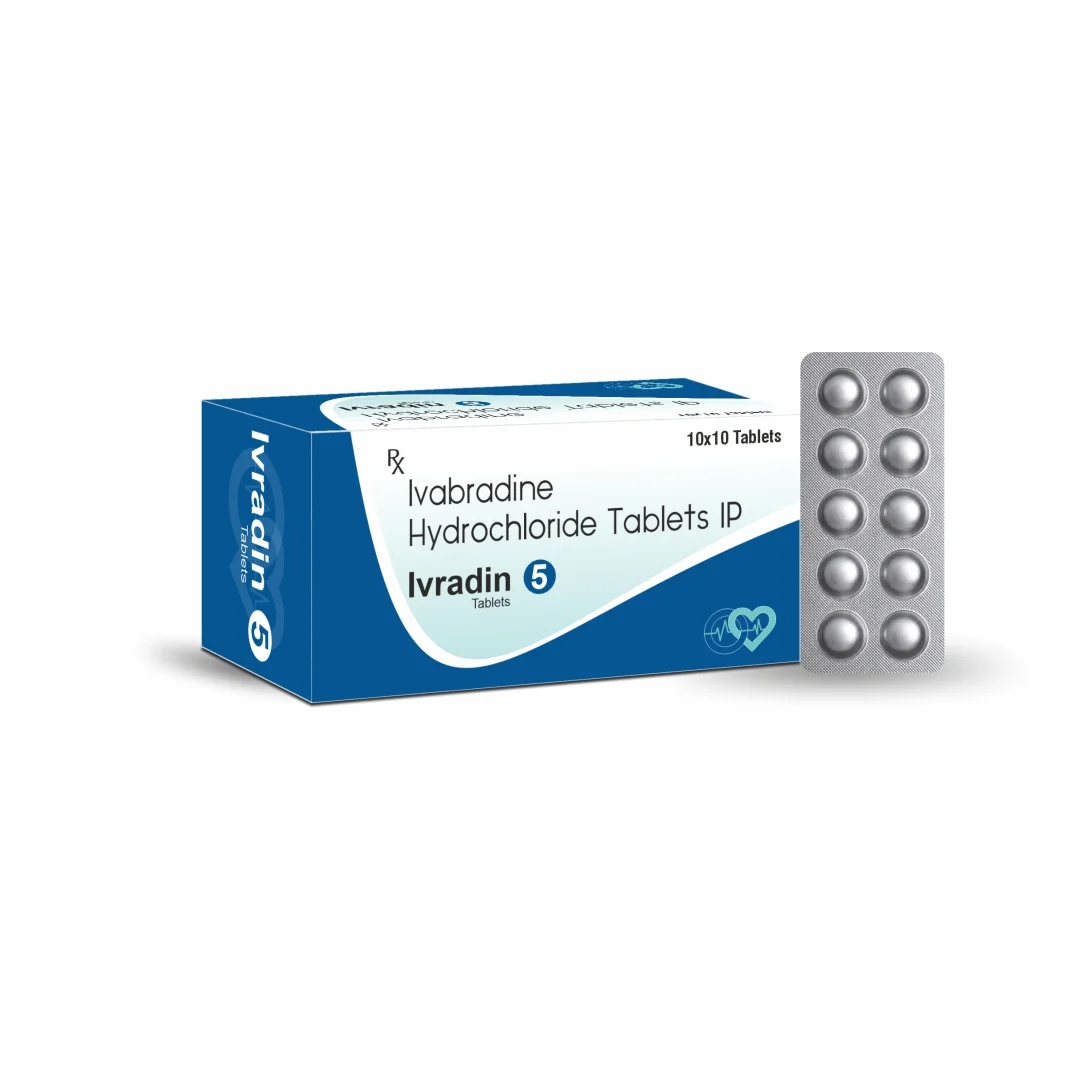
IVRADIN-5 contains Ivabradine Hydrochloride 5 mg in tablet form. Ivabradine is a heart-rate-lowering medicine that selectively inhibits the If (“funny”) current in the sinoatrial node. By slowing the heart rate without directly reducing myocardial contractility, it may help reduce the heart’s oxygen demand in selected patients with chronic heart failure or stable angina, according to the applicable prescribing information.
For related cardiovascular and diabetic formulations, explore the Cardries Biotic range from Medhexa Pharma for pharmaceutical products and business enquiries.
Therapeutic Segment
Cardiovascular Therapy | Heart Failure Management | Anti-Anginal Therapy | Heart Rate Control | If Channel Inhibitors
Uses of IVRADIN-5
IVRADIN-5 may be prescribed as part of an individualized cardiovascular treatment plan for selected patients with:
- Chronic stable angina
- Chronic heart failure with reduced ejection fraction in appropriate patients
- Elevated resting heart rate where heart-rate reduction is clinically indicated
- Patients who require heart-rate control when other treatment options are unsuitable or insufficient, depending on the approved indication
The exact indication depends on the patient’s heart rate, cardiac function, symptoms, other medicines and applicable regulatory guidance.
Ivabradine does not provide immediate relief from an acute episode of chest pain. Patients with sudden or severe chest pain should seek urgent medical attention.
Key Benefits of IVRADIN-5
- Heart Rate Control: Helps lower an elevated resting heart rate in appropriately selected patients.
- Selective Cardiac Action: Acts primarily on the If current in the sinoatrial node.
- Helps Reduce Cardiac Workload: Lowering heart rate can reduce myocardial oxygen demand.
- Supports Angina Management: May help improve exercise tolerance and reduce symptoms in selected patients with stable angina.
- Heart Failure Support: May be used in selected patients with chronic heart failure to help reduce the risk of hospitalization for worsening heart failure.
- 5 mg Strength: Provides Ivabradine Hydrochloride 5 mg in a convenient oral tablet.
How IVRADIN-5 Works
Ivabradine selectively inhibits the If current in the sinoatrial node, the heart’s natural pacemaker.
The If current contributes to the spontaneous electrical activity that determines the heart rate. By selectively reducing this current, ivabradine slows the rate at which the sinoatrial node generates impulses.
Unlike beta blockers, ivabradine primarily lowers heart rate without directly reducing myocardial contractility. The resulting reduction in heart rate can decrease the heart’s oxygen requirement and may improve the balance between oxygen supply and demand in appropriately selected patients.
Common Side Effects of IVRADIN-5
Some people may experience side effects while taking ivabradine. Possible effects include:
- Temporary brightness or visual phenomena (phosphenes)
- Headache
- Dizziness
- Slow heart rate (bradycardia)
- Increased blood pressure
- Fatigue
- Changes in heart rhythm
- Atrial fibrillation
Visual symptoms may occur particularly during the early stages of treatment and often appear as brief changes in brightness or light perception.
Seek medical attention if you experience fainting, severe dizziness, a very slow heartbeat, new irregular heartbeat, worsening chest pain or significant breathing difficulty.
Important Safety Information
Use IVRADIN-5 only according to the advice of a qualified healthcare professional.
- Ivabradine lowers heart rate. Regular monitoring of resting heart rate may be required during treatment.
- Do not use ivabradine in patients with significant resting bradycardia unless specifically directed by a specialist.
- Tell your doctor if you have a low heart rate, low blood pressure, conduction problems, irregular heart rhythm, heart failure or other cardiovascular conditions.
- Ivabradine can increase the risk of atrial fibrillation. Report a rapid or irregular heartbeat to your healthcare professional.
- Ivabradine can cause temporary visual brightness phenomena. Use caution when driving at night or in situations involving sudden changes in light, particularly when starting treatment.
- Avoid grapefruit or grapefruit juice unless your healthcare professional advises otherwise, as grapefruit can increase exposure to ivabradine.
- Do not combine ivabradine with strong CYP3A4 inhibitors, such as certain macrolide antibiotics, azole antifungals and some HIV medicines, unless specifically approved by your healthcare professional.
- Medicines that significantly prolong the QT interval or substantially lower heart rate may require special consideration when used with ivabradine.
- Tell your doctor if you have significant liver disease or other conditions that may affect treatment.
- Ivabradine is generally not recommended during pregnancy because adequate therapeutic benefit has not been established and fetal risk may be a concern.
- Discuss breastfeeding with your healthcare professional before using ivabradine.
- Tell your doctor about all prescription medicines, over-the-counter medicines, supplements and herbal products you take.
- Do not stop or change the dose without medical advice.
For additional information about Ivabradine, refer to the DailyMed prescribing information.
Dosage & Administration
Take IVRADIN-5 exactly as prescribed by your healthcare professional.
For chronic stable angina or chronic heart failure, the appropriate starting dose depends on the patient’s age, resting heart rate, cardiac condition and the applicable prescribing information.
In commonly referenced adult regimens, ivabradine may be initiated at 5 mg twice daily with meals and adjusted according to heart rate and tolerability. Some patients may require a lower starting dose, while the maximum dose depends on the approved indication and product information.
Take the tablet with food when directed because food can affect ivabradine exposure.
Your healthcare professional may adjust or discontinue treatment if the resting heart rate becomes too low or if significant adverse effects occur. Do not change the dose yourself.
If you miss a dose, follow your healthcare professional’s instructions. Do not take an extra dose to compensate for a missed tablet.
Storage
- Store in a cool, dry place.
- Protect the tablets from excessive heat and moisture.
- Keep the tablets in their original ALU-ALU packaging until use.
- Protect from direct sunlight.
- Keep out of the sight and reach of children.
- Do not use the product after the expiry date printed on the pack.

Reviews
There are no reviews yet.