

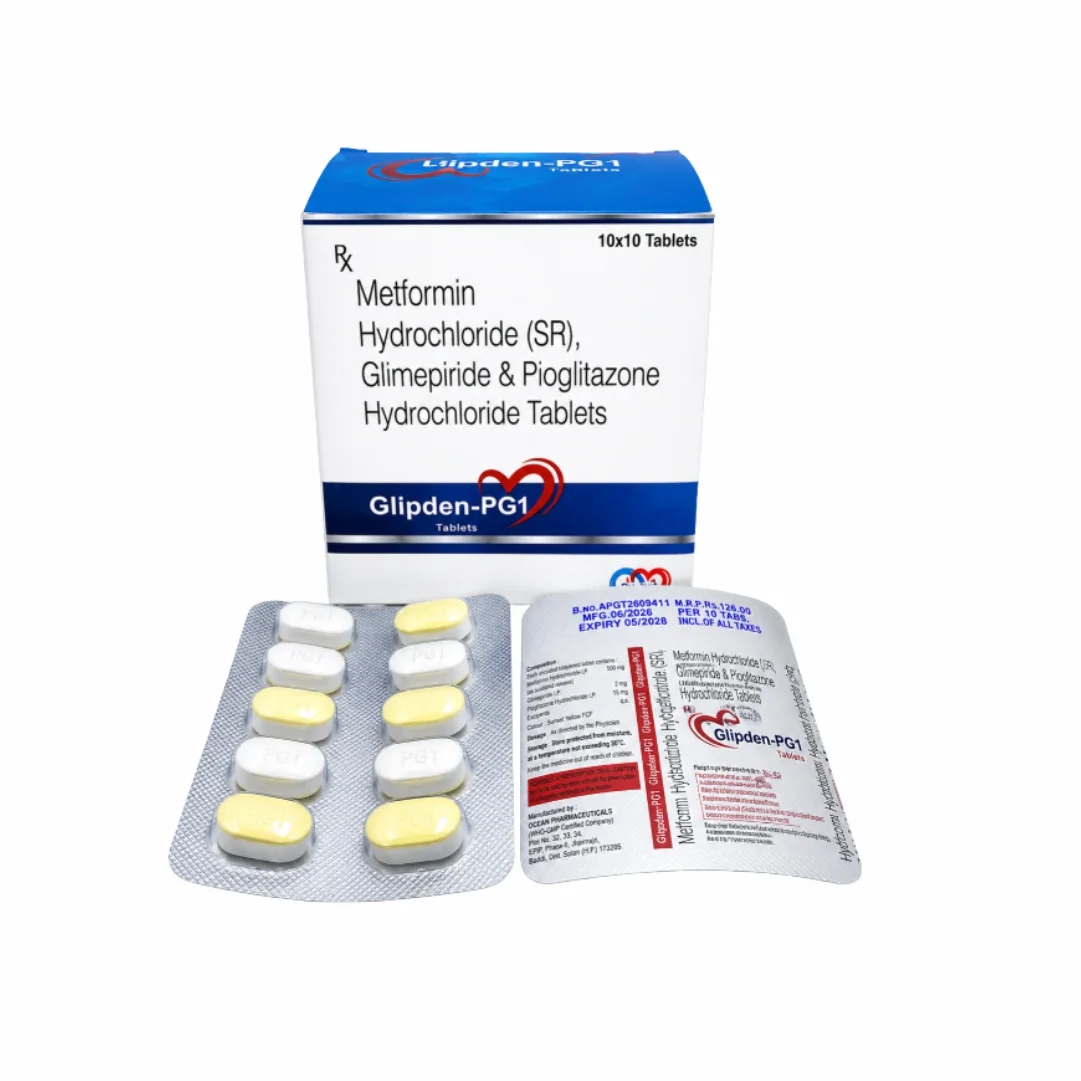
Description
GLIPDEN-PG1 contains Metformin Hydrochloride 500 mg, Glimepiride 1 mg and Pioglitazone Hydrochloride 15 mg in tablet form. This three-drug combination brings together medicines with complementary effects on blood glucose. Metformin helps reduce glucose production by the liver and improves insulin sensitivity, Glimepiride stimulates insulin release from the pancreas, while Pioglitazone improves insulin sensitivity in peripheral tissues. Together, they may help improve glycaemic control in adults with type 2 diabetes mellitus when prescribed alongside appropriate diet, exercise and medical supervision.
For related diabetic and cardiovascular formulations, explore the Cardries Biotic product range for pharmaceutical products and business enquiries.
Therapeutic Segment
Anti-Diabetic Therapy | Type 2 Diabetes Management | Biguanides | Sulfonylureas | Thiazolidinediones | Blood Glucose Control
Uses of GLIPDEN-PG1
Healthcare professionals may prescribe GLIPDEN-PG1 as part of an individualized treatment plan for:
- Type 2 diabetes mellitus
- Inadequate blood glucose control with lifestyle measures alone
- Patients requiring combination therapy with Metformin, Glimepiride and Pioglitazone
- Patients whose blood glucose remains inadequately controlled with fewer antidiabetic medicines
- Long-term glycaemic management as part of a comprehensive diabetes-care plan
The combination is intended for type 2 diabetes and does not treat type 1 diabetes or diabetic ketoacidosis.
Key Benefits of GLIPDEN-PG1
- Triple-action formulation: Combines three antidiabetic medicines with complementary mechanisms.
- Metformin 500 mg: Helps reduce glucose production by the liver and improves insulin sensitivity.
- Glimepiride 1 mg: Stimulates pancreatic insulin release to help lower blood glucose.
- Pioglitazone 15 mg: Improves insulin sensitivity and helps reduce insulin resistance.
- Multiple glucose-lowering pathways: Addresses hepatic glucose production, insulin secretion and insulin resistance.
- Convenient oral formulation: Combines three prescribed antidiabetic agents in one tablet.
How GLIPDEN-PG1 Works
Metformin Hydrochloride belongs to the biguanide class. It primarily reduces glucose production by the liver. It also improves insulin sensitivity, allowing the body to use glucose more effectively.
Glimepiride belongs to the sulfonylurea class. It stimulates pancreatic beta cells to release insulin. This action can lower blood glucose, although it can also increase the risk of hypoglycaemia.
Pioglitazone Hydrochloride belongs to the thiazolidinedione class. It activates PPAR-gamma receptors, which improves insulin sensitivity in tissues such as skeletal muscle and adipose tissue. Consequently, the body can respond to insulin more effectively.
Together, these three medicines target different aspects of type 2 diabetes and may provide broader glucose-lowering effects when combination therapy is clinically appropriate.
Common Side Effects of GLIPDEN-PG1
Because GLIPDEN-PG1 contains three antidiabetic medicines, side effects can arise from any of its components. Possible effects include:
- Nausea
- Diarrhoea
- Abdominal discomfort
- Headache
- Dizziness
- Low blood sugar (hypoglycaemia)
- Weight gain
- Fluid retention or swelling
- Increased appetite
- Fatigue
Metformin commonly causes gastrointestinal symptoms, particularly when treatment begins. Glimepiride can cause hypoglycaemia and weight gain, while Pioglitazone can contribute to fluid retention and weight gain.
Important Safety Information
Use GLIPDEN-PG1 only according to the advice of a qualified healthcare professional.
Low Blood Sugar
Glimepiride can cause hypoglycaemia, particularly when meals are missed, physical activity increases unexpectedly or the medicine is combined with other glucose-lowering therapies.
Watch for sweating, shakiness, hunger, dizziness, confusion, weakness or a rapid heartbeat. Follow the hypoglycaemia-management instructions provided by your healthcare professional.
Heart Failure and Fluid Retention
Pioglitazone can cause fluid retention and may worsen or trigger heart failure in susceptible patients. Tell your doctor if you have heart failure or a history of significant heart problems.
Seek medical attention if you develop unusual shortness of breath, rapid weight gain, swelling of the legs or feet, or increasing fatigue.
Kidney Function and Metformin
Healthcare professionals should assess kidney function before and during Metformin treatment when appropriate. Reduced kidney function can increase Metformin accumulation and raise the risk of lactic acidosis, a rare but serious complication.
Seek urgent medical attention for unusual weakness, breathing difficulty, persistent vomiting, severe abdominal discomfort or other concerning symptoms.
Liver Function
Pioglitazone requires consideration of liver health before and during treatment. Tell your doctor if you have liver disease or develop persistent nausea, loss of appetite, dark urine or yellowing of the skin or eyes.
Bladder Cancer Considerations
Pioglitazone carries a warning regarding a possible association with bladder cancer. Healthcare professionals consider individual risk factors before prescribing long-term treatment.
Report blood in the urine, painful urination or other unusual urinary symptoms to your doctor.
Bone Health
Pioglitazone can increase the risk of bone fractures, particularly in some women. Tell your healthcare professional if you have osteoporosis or other factors that increase fracture risk.
Vitamin B12
Long-term Metformin treatment can reduce Vitamin B12 levels in some patients. Healthcare professionals may monitor B12 levels when clinically appropriate, especially when symptoms or risk factors suggest deficiency.
Alcohol and Drug Interactions
Tell your healthcare professional about all prescription medicines, over-the-counter medicines, vitamins and supplements you use. Alcohol can affect blood glucose control and may increase certain risks associated with Metformin.
Also inform your healthcare professional before imaging procedures involving iodinated contrast media, because Metformin may require temporary interruption depending on kidney function and the procedure.
Pregnancy and Breastfeeding
Discuss pregnancy, planned pregnancy or breastfeeding with your healthcare professional before using GLIPDEN-PG1. Your doctor can determine the most appropriate diabetes-management approach for your circumstances.
For detailed information, refer to the DailyMed prescribing information for Glimepiride
Dosage & Administration
Take GLIPDEN-PG1 exactly as prescribed by your healthcare professional.
The appropriate regimen depends on blood glucose levels, previous diabetes treatment, kidney and liver function, diet, response to therapy and the risk of hypoglycaemia. Therefore, do not change the dose or frequency yourself.
Because Glimepiride can cause low blood sugar, take the medicine according to the meal and dosing instructions provided by your healthcare professional.
Pioglitazone may take several weeks to produce its full glucose-lowering effect. Continue regular blood glucose monitoring and follow your diabetes-care plan.
Take the tablet with water according to the prescribed instructions. Do not take an additional tablet if a dose is missed unless your healthcare professional specifically advises you to do so.
Storage
- Store GLIPDEN-PG1 in a cool, dry place.
- Protect the tablets from excessive heat and moisture.
- Keep the tablets in their original BLISTER packaging until use.
- Protect from direct sunlight.
- Keep out of the sight and reach of children.
- Do not use the product after the expiry date printed on the pack.



Reviews
There are no reviews yet.