
Description
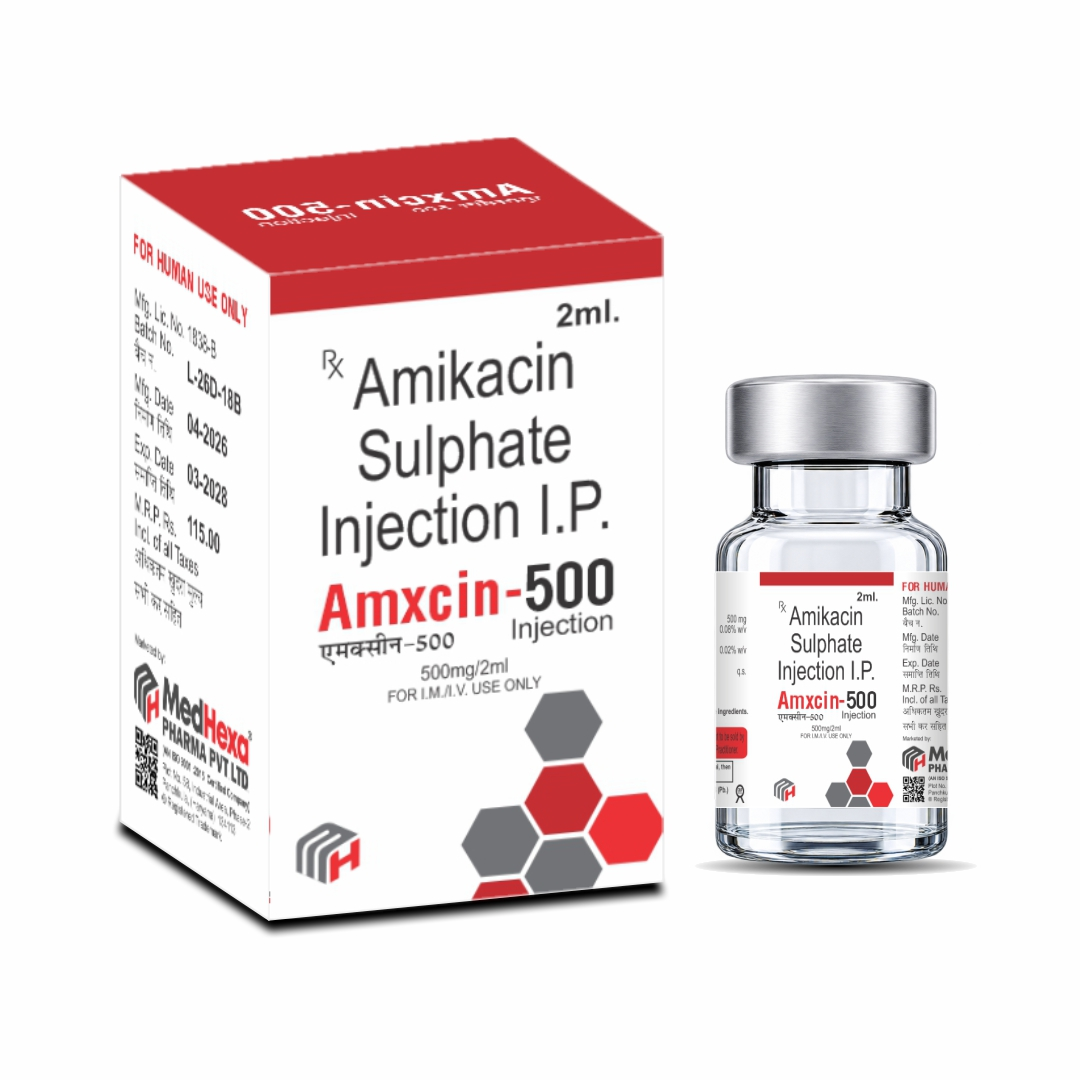
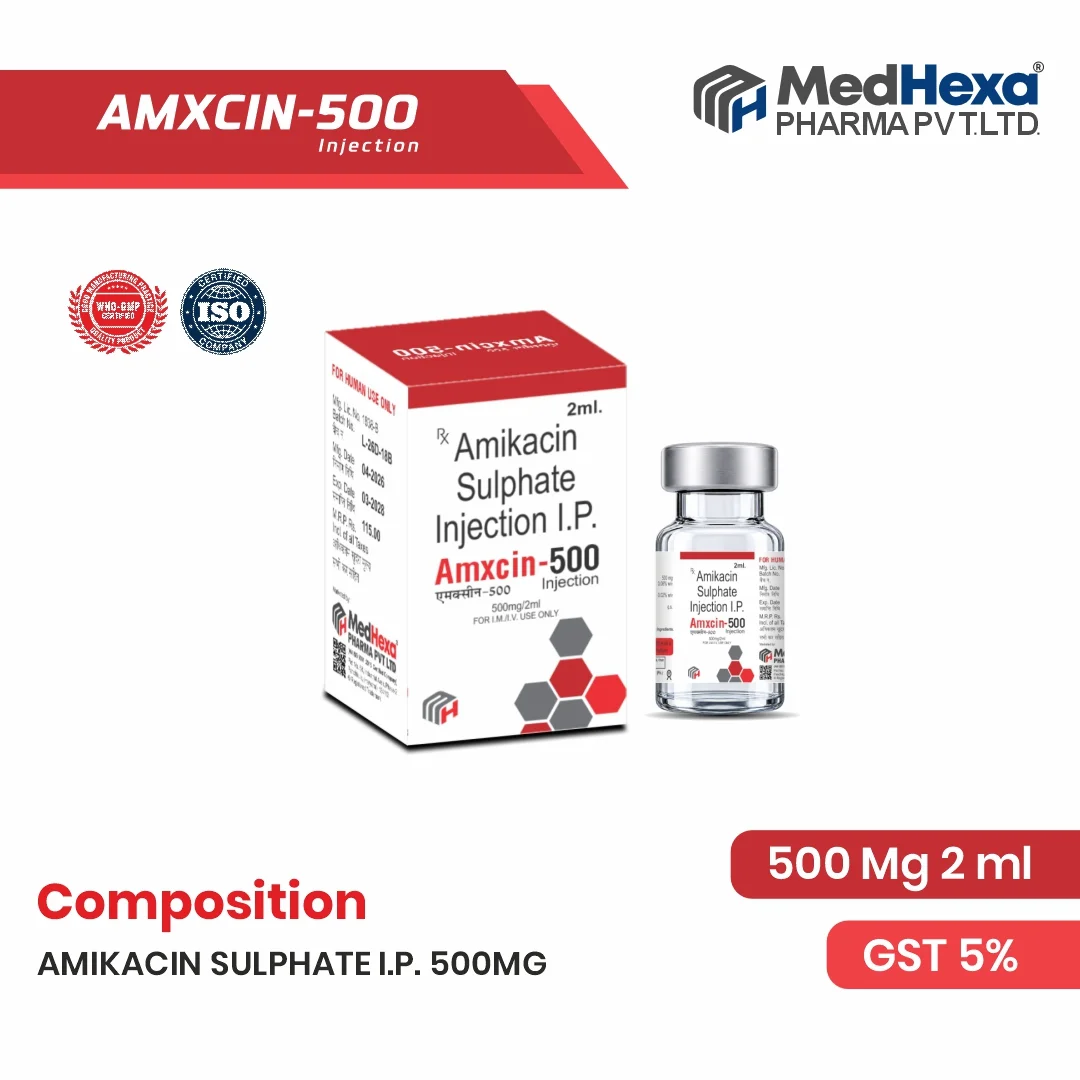
AMXCIN-500 contains Amikacin Sulphate I.P. 500 mg in injection form. In addition, Amikacin belongs to the aminoglycoside antibiotic group, and doctors use it under medical supervision to treat serious bacterial infections caused by susceptible bacteria.
In particular, healthcare professionals may use Amikacin injection for serious infections such as bacterial septicemia, bacteremia, peritonitis and certain burn-related infections. However, doctors should select Amikacin according to the patient’s infection, bacterial susceptibility and clinical condition.
For more injectable products, you can also explore the MedHexa Pharma Injectable range.
Therapeutic Segment
Antibiotic | Anti-Infective | Critical Care
Uses of AMXCIN-500
Doctors may prescribe AMXCIN-500 to treat serious bacterial infections caused by susceptible organisms. In particular, healthcare professionals may use Amikacin injection for:
- Bacterial septicemia
- Bacteremia
- Peritonitis and other serious intra-abdominal infections
- Burns and certain burn-related infections
- Serious skin and soft tissue infections
- Certain serious respiratory tract infections
- Serious infections caused by susceptible Gram-negative bacteria
Moreover, the exact use depends on the infection, bacterial susceptibility and the patient’s clinical condition. Therefore, a qualified healthcare professional should select and administer AMXCIN-500 according to the patient’s needs.
Key Benefits of AMXCIN-500
AMXCIN-500 provides Amikacin 500 mg in injectable form. As a result, its key benefits include:
- Helps treat serious bacterial infections
- Provides an aminoglycoside antibiotic option
- May help manage bacterial septicemia
- May help treat bacteremia caused by susceptible bacteria
- May support treatment of serious intra-abdominal infections such as peritonitis
- May help manage certain burn-related infections
- Allows healthcare professionals to administer the medicine through the intramuscular or intravenous route
In addition, Amikacin works against several susceptible bacteria by interfering with bacterial protein production. Therefore, it can help control serious bacterial infections when the causative organisms respond to the medicine.
How AMXCIN-500 Works
First, Amikacin belongs to the aminoglycoside class of antibiotics. It acts against susceptible bacteria by interfering with bacterial protein production.
As a result, susceptible bacteria cannot produce the proteins they need for growth and survival. Therefore, Amikacin can help control serious bacterial infections when the causative organisms respond to the medicine.
However, AMXCIN-500 does not treat viral infections such as the common cold or flu.
Common Side Effects
Amikacin can cause side effects, particularly because aminoglycoside antibiotics require careful monitoring. For example, possible effects include:
- Nausea
- Vomiting
- Headache
- Dizziness
- Injection-site reactions
- Changes in kidney function
- Hearing or balance problems
Usually, mild effects may improve during treatment. However, Amikacin can sometimes affect kidney function, hearing or balance.
Therefore, contact your healthcare professional if you notice hearing changes, balance problems, reduced urine output, severe dizziness or other unusual symptoms during treatment.
AMXCIN-500 Safety Information
Take AMXCIN-500 only as directed by a healthcare professional.
Before treatment, tell your doctor if you:
- Have kidney disease or reduced kidney function
- Have hearing or balance problems
- Have previously experienced hearing loss with antibiotic treatment
- Are dehydrated
- Take medicines that may affect the kidneys or hearing
- Take potent diuretics such as furosemide
- Are pregnant or breastfeeding
- Have an allergy to Amikacin or other aminoglycoside antibiotics
In addition, Amikacin can affect the kidneys and hearing in some patients. Furthermore, patients with kidney problems, dehydration, higher doses or prolonged treatment may face a higher risk.
Therefore, your doctor may check kidney function during treatment. In selected patients, healthcare professionals may also monitor Amikacin blood levels and hearing function.
Moreover, do not start, stop or change AMXCIN-500 treatment without medical advice.
Unnecessary antibiotic use can also contribute to antibiotic resistance. Therefore, healthcare professionals should use Amikacin when they suspect or confirm a bacterial infection that requires this type of antibiotic.
AMXCIN-500 Dosage and Administration
The treating healthcare professional decides the Amikacin dose according to the patient’s body weight, kidney function, infection and overall clinical condition.
Therefore, follow the prescribed treatment schedule carefully.
- A qualified healthcare professional should administer AMXCIN-500.
- The healthcare professional may give the injection through the intramuscular or intravenous route.
- In addition, your doctor may check kidney function during treatment.
- Patients with reduced kidney function may require a dose adjustment.
- Furthermore, doctors may monitor Amikacin blood levels in selected patients.
- Do not self-administer the injection.
- Do not change the dose or treatment duration without medical advice.
Finally, follow the prescribed treatment schedule carefully because your doctor considers factors such as body weight and kidney function when selecting the appropriate dose.
Amikacin Sulphate Information
For additional information about Amikacin Sulphate, including its uses, precautions, warnings and prescribing information, refer to the official DailyMed Amikacin Sulfate information.
AMXCIN-500 Storage
- First, store the injection according to the conditions stated on the product label.
- Also, keep the vial in its original packaging until use.
- In addition, protect the medicine from excessive heat and unsuitable storage conditions.
- Furthermore, keep the injection away from direct sunlight unless the product label states otherwise.
- Finally, keep the medicine out of reach of children.
- Do not use the injection if you notice damage, leakage or an unusual appearance.