

Description
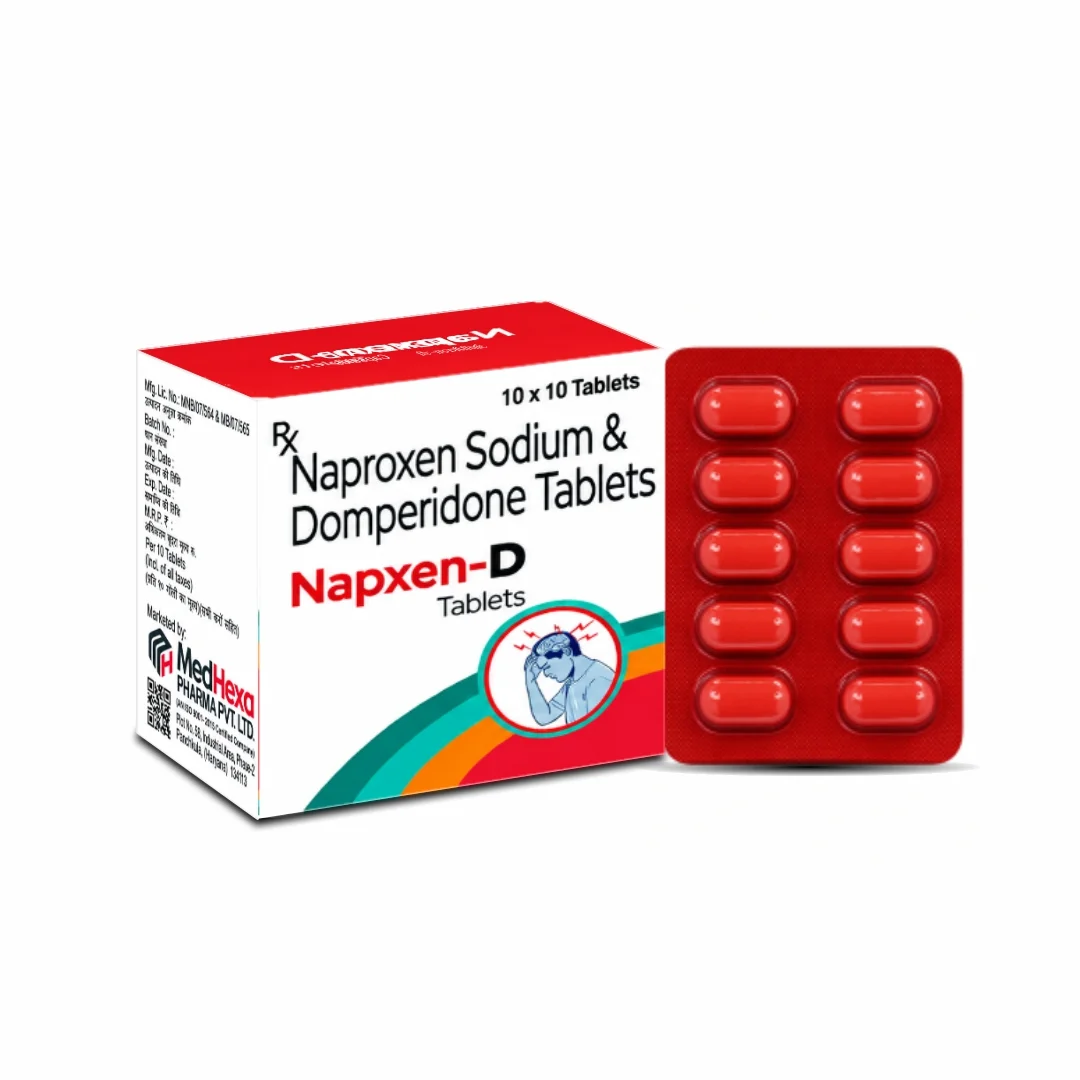
NAPXEN-D combines Naproxen 500 mg and Domperidone 10 mg in one tablet. Naproxen helps relieve pain and inflammation, while Domperidone helps control nausea and vomiting. Therefore, healthcare professionals may consider this combination when pain or inflammation occurs alongside nausea or vomiting.
For related formulations and therapeutic segments, explore the Medhexa Pharma Tablet Range for additional product information.
Therapeutic Segment
Pain Management | NSAIDs | Anti-inflammatory | Anti-emetic Therapy
Uses of NAPXEN-D
NAPXEN-D can help manage painful conditions where nausea or vomiting also occurs. In particular, Naproxen has established uses in several painful and inflammatory conditions, while Domperidone targets nausea and vomiting.
Depending on the patient’s condition, a healthcare professional may consider NAPXEN-D for:
- Pain associated with inflammation
- Musculoskeletal pain
- Joint-related pain and inflammation
- Acute painful conditions
- Painful menstrual periods
- Pain accompanied by nausea or vomiting
However, the appropriate use depends on the patient’s diagnosis, medical history and other medicines.
Key Benefits of NAPXEN-D
- Contains Naproxen 500 mg for pain and inflammation
- Contains Domperidone 10 mg to relieve nausea and vomiting
- Combines two active ingredients with different therapeutic actions
- Helps address pain while also managing associated nausea
- Available in convenient oral tablet form
- Supplied in 10 × 10 Tablets packaging
How NAPXEN-D Works
NAPXEN-D works through two different mechanisms.
First, Naproxen blocks cyclooxygenase enzymes and reduces the production of prostaglandins. As a result, it helps reduce pain and inflammation.
Meanwhile, Domperidone blocks dopamine receptors and provides anti-emetic activity. Consequently, it helps relieve symptoms of nausea and vomiting. EMA guidance recommends Domperidone at the lowest effective dose for the shortest necessary duration.
Common Side Effects of NAPXEN-D
Some people may experience side effects while taking NAPXEN-D. These can include:
- Nausea
- Stomach discomfort
- Indigestion or heartburn
- Abdominal pain
- Vomiting
- Diarrhoea or constipation
- Headache
- Dizziness
- Fatigue
Usually, mild effects may settle during treatment. However, seek medical advice if symptoms become severe, persistent or unusual.
Important Safety Information
Use NAPXEN-D only according to your healthcare professional’s advice.
Naproxen belongs to the NSAID class. Therefore, it can increase the risk of serious gastrointestinal bleeding, ulceration and perforation. It can also increase the risk of serious cardiovascular events, including heart attack and stroke. These risks can occur during treatment and may increase with longer use.
Before taking NAPXEN-D, tell your doctor if you have:
- A history of stomach ulcers or gastrointestinal bleeding
- Heart disease or high blood pressure
- Kidney or liver problems
- Asthma triggered by aspirin or other NSAIDs
- Heart failure or fluid retention
- Previous allergic reactions to NSAIDs
In addition, avoid taking NAPXEN-D with other NSAIDs unless your healthcare professional specifically recommends the combination.
Tell your doctor about anticoagulants, corticosteroids, blood-pressure medicines, diuretics and other medicines you take because Naproxen can interact with several medicines.
Domperidone also requires specific precautions. It can affect cardiac rhythm and carries a higher risk in certain patients, particularly those with underlying heart conditions or those taking medicines that prolong the QT interval or strongly inhibit CYP3A4.
Therefore, tell your doctor if you have a heart rhythm disorder, significant electrolyte disturbance or severe liver disease. Also, inform your doctor about all prescription and non-prescription medicines you take.
Domperidone should generally be used at the lowest effective dose for the shortest possible duration, with EMA guidance stating that treatment should not usually exceed one week.
Seek urgent medical attention if you develop signs of gastrointestinal bleeding, severe allergic reactions, chest pain, fainting or an unusual heartbeat.
For additional information, refer to the Naproxen prescribing information on DailyMed and EMA information on Domperidone-containing medicines.
Dosage & Administration
The appropriate dose and treatment duration depend on the patient’s condition, age, medical history and other medicines.
Take NAPXEN-D exactly as directed by your healthcare professional. Swallow the tablet with water and follow the prescribed schedule.
Do not increase the dose or extend the treatment period on your own. Because Naproxen carries dose- and duration-related risks, while Domperidone requires short-term use, your healthcare professional should determine the appropriate treatment period.
If you miss a dose, follow the instructions provided by your healthcare professional. Do not take an extra tablet to make up for a missed dose unless your doctor specifically advises you to do so.
Storage
- Store NAPXEN-D in a cool, dry place.
- Protect the tablets from excessive heat and moisture.
- Keep the tablets away from direct sunlight.
- Keep them in their original packaging until use.
- Keep out of reach of children.
- Follow the storage conditions printed on the product pack.

Reviews
There are no reviews yet.