Why Do Some Medicines Need to Be Taken Before, With, or After Food?
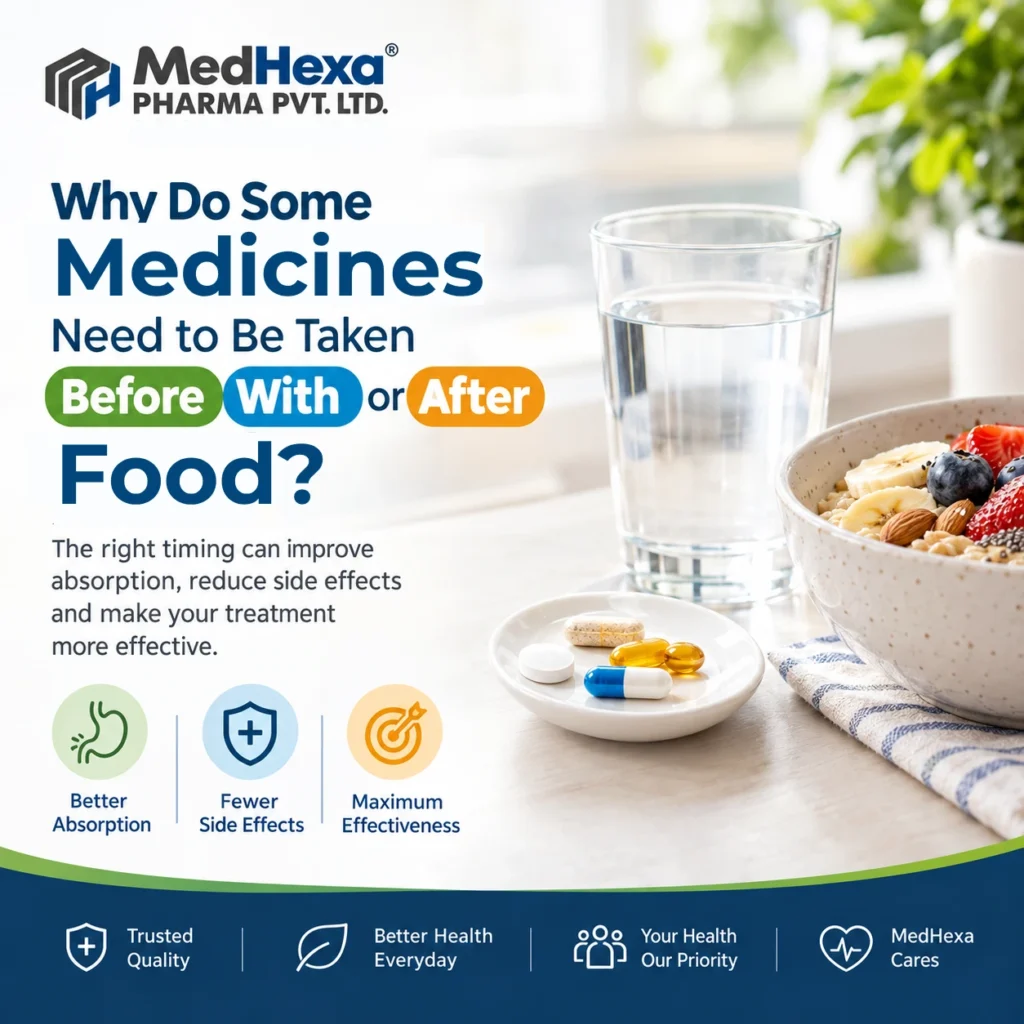
Why Do Some Medicines Need to Be Taken Before, With, or After Food? Have you ever wondered why one medicine should be taken before food, another with food, and another after food? At first, these instructions may seem like small details. However, meal timing can affect the way some medicines work in your body. A meal can change how quickly your stomach empties. It can also affect how much of a medicine your body absorbs. In some cases, eating can make a medicine easier to tolerate. That is why doctors, pharmacists, and medicine labels sometimes give specific instructions about food. Let’s look at what these instructions mean and why you should follow them. What Does Food Have to Do With Medicine? After you swallow a tablet or capsule, the medicine moves through your digestive system. The active ingredient then reaches the place where your body can absorb it. Food can influence this process. A meal may change the movement of your stomach and intestines. The amount and type of food may also affect the absorption of some medicines. The FDA studies these effects when researchers develop medicines because food can increase drug exposure, reduce it, delay absorption, or have little important effect. This explains why medicine labels sometimes include instructions such as “take before food,” “take with food,” or “take after food.” Why Are Some Medicines Taken Before Food? Some medicines work best when you take them before eating. Food may reduce absorption Certain medicines do not enter the bloodstream as well when food sits in the digestive tract. A meal can therefore reduce the amount of medicine that reaches the body. Taking the medicine before food can help avoid this problem when the medicine requires that timing. Some medicines need an empty stomach A few medicines have specific fasting instructions because food can interfere with their absorption. For example, some oral bisphosphonates have very poor absorption when food is present. Their instructions therefore require an empty stomach and a waiting period before eating. The exact timing depends on the medicine. For that reason, you should never assume that every tablet works better before breakfast. Why Are Some Medicines Taken With Food? “Take with food” is a genuine medicine instruction. Doctors may recommend it for several reasons. Food may improve stomach comfort Various medicines can cause stomach discomfort, nausea, or irritation. Taking them with food may help reduce these effects. That does not mean food makes every medicine safer. The recommendation depends on the medicine and its known effects. Food may change absorption Food can also change how much medicine enters the bloodstream. For some medicines, that change can improve the amount of medicine available to the body. In other cases, food can reduce absorption. The FDA evaluates these food effects when establishing medicine instructions. So if your medicine says “take with food,” follow that instruction rather than changing the timing yourself. Is “With Food” the Same as “After Food”? Not necessarily. The two instructions sound similar, but they can have different meanings. With food connects the medicine with a meal. After food tells you to take the medicine after eating. The correct timing depends on the medicine. You should not automatically replace one instruction with the other. The FDA recommends asking healthcare professionals whether a medicine should be taken with food, without food, before a meal, or after a meal when the instructions are unclear. Why Are Some Medicines Taken After Food? A number of medicines can cause stomach discomfort when taken without food. For those medicines, eating first may make them easier to tolerate. Your doctor or the medicine label may therefore recommend taking them after a meal. Still, this does not mean that every medicine needs food. The medicine itself determines the correct instruction. If the label says “after food,” follow that direction instead of changing the timing based on personal preference. What Does “On an Empty Stomach” Actually Mean? You may also see the phrase “take on an empty stomach.” This instruction means that food should not interfere with the medicine in the way it could during or after a meal. The timing can vary There is no single timing rule for every medicine that requires an empty stomach. One medicine may tell you to take it before breakfast. Another may require a specific gap before or after eating. Follow the instructions that come with your medicine. If the wording seems unclear, ask your pharmacist or doctor rather than guessing. Food Can Change How Much Medicine Reaches the Bloodstream One of the most important concepts behind medicine timing is drug exposure. After an oral medicine is absorbed, its active ingredient enters the bloodstream. If food increases absorption, more of the drug may become available in the body. If food decreases absorption, less may become available. Neither situation is automatically good or bad. It depends on the medicine. The FDA explains that increased exposure can potentially increase adverse effects, while decreased exposure can potentially reduce effectiveness. This is why researchers study medicines under different food conditions during drug development. The instructions eventually printed on the medicine label are based on evidence about how the drug behaves. Does the Type of Food Matter? Sometimes, yes. Food is not simply one uniform thing. A light meal and a high-fat meal can have different effects on the digestive system and therefore on the absorption of certain medicines. The FDA specifically recommends assessing high-fat meals during food-effect studies because they can produce substantial changes in gastrointestinal physiology and drug absorption. This does not mean that every medicine must be taken with a high-fat meal. It means that the composition of food can matter for some medicines. That is another reason why patients should follow the medicine-specific instructions rather than relying on general advice. What About Milk and Dairy Products? Milk is a good example of why “take it with food” does not mean “take it with any food.” Certain medicines can interact with calcium or dairy products and may not