
Description
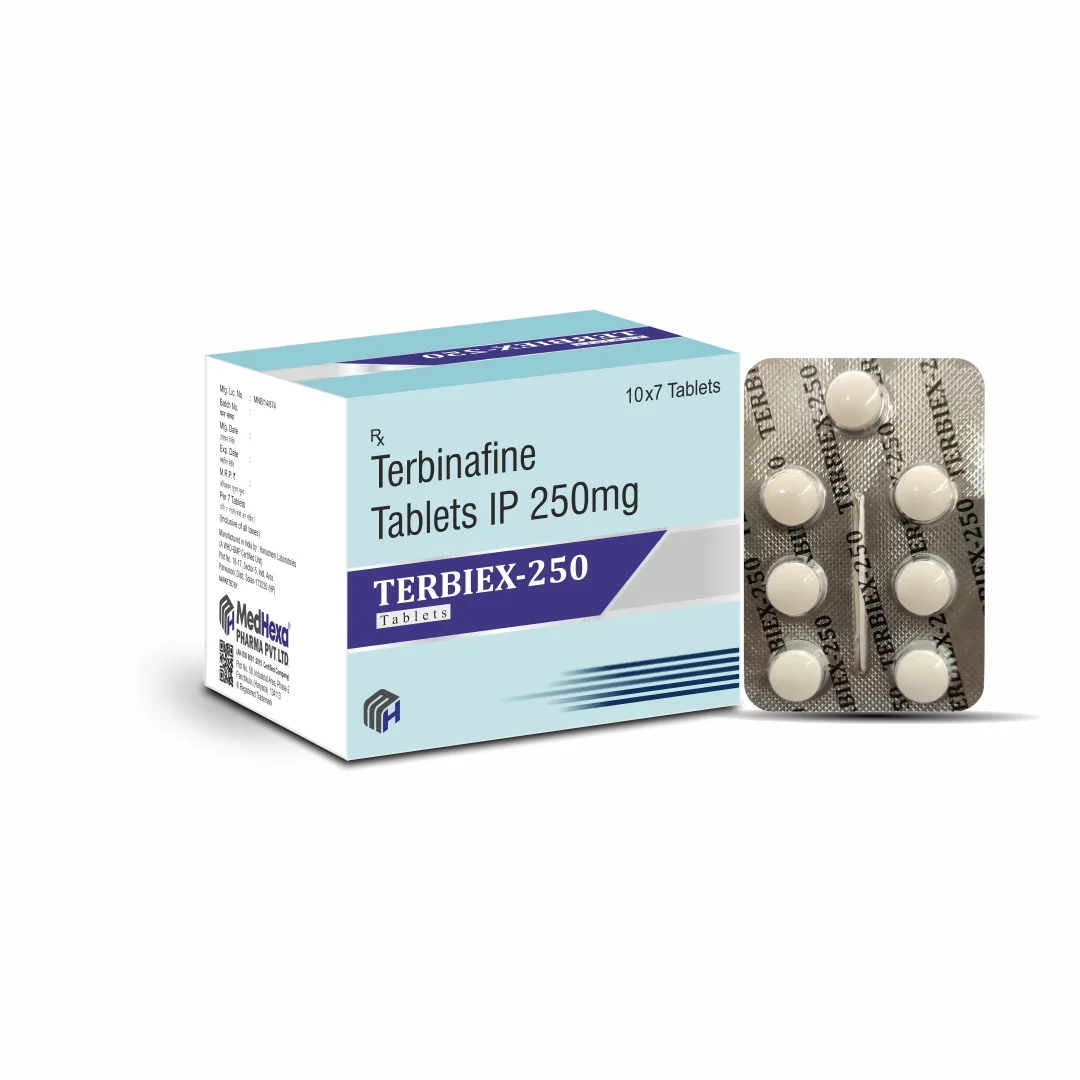
TERBIEX-250 contains Terbinafine 250 mg in tablet form. Terbinafine is an allylamine antifungal medicine used for certain fungal infections, particularly fungal nail infections caused by dermatophytes. Oral terbinafine works by interfering with fungal cell membrane formation, which helps stop fungal growth.
For related dermatology and antifungal formulations, explore the Medhexa Pharma product range for pharmaceutical products and business enquiries.
Therapeutic Segment
Antifungal Therapy | Dermatology | Antifungal Medicines | Skin & Nail Care | Anti-Infective Therapy
Uses of TERBIEX-250
TERBIEX-250 may be prescribed for selected fungal infections, including:
- Fungal infections of the fingernails or toenails caused by susceptible dermatophytes
- Onychomycosis (fungal nail infection)
- Certain other fungal infections when oral Terbinafine is considered appropriate by a healthcare professional
- Fungal infections that may require systemic antifungal treatment rather than topical therapy
Oral Terbinafine is particularly established for dermatophyte nail infections. The exact indication should follow the diagnosis and approved prescribing information.
Key Benefits of TERBIEX-250
- Antifungal action: Contains Terbinafine 250 mg for systemic antifungal treatment.
- Allylamine antifungal: Acts directly on an important pathway involved in fungal cell membrane formation.
- Nail infection management: Oral Terbinafine is an established treatment for dermatophyte fungal nail infections.
- Systemic formulation: Tablet administration allows the medicine to reach infection sites through the bloodstream.
- 250 mg strength: Provides the strength supplied in TERBIEX-250.
- Prescription-based treatment: Suitable for use when a healthcare professional determines that oral antifungal therapy is appropriate.
How TERBIEX-250 Works
Terbinafine inhibits the fungal enzyme squalene epoxidase. This interferes with the production of ergosterol, an important component of the fungal cell membrane.
As ergosterol production decreases, squalene accumulates inside the fungal cell and membrane function becomes disrupted. Consequently, the medicine can inhibit fungal growth and contribute to the elimination of susceptible fungi.
Common Side Effects of TERBIEX-250
Some people may experience side effects while taking oral Terbinafine. Possible effects include:
- Headache
- Nausea
- Indigestion
- Stomach discomfort
- Diarrhoea
- Reduced appetite
- Dizziness
- Skin rash
- Muscle or joint pain
- Tiredness
NHS information also identifies gastrointestinal upset, muscle or joint pain and dizziness among possible effects of terbinafine tablets.
Important Safety Information
Use TERBIEX-250 only according to the advice of a qualified healthcare professional.
- Oral Terbinafine requires particular attention to liver health. Patients should be evaluated for chronic or active liver disease before treatment.
- Your healthcare professional may recommend liver-function testing before and during treatment, particularly when clinically appropriate.
- Stop taking the medicine and seek medical attention if you develop signs that may indicate liver problems, such as yellowing of the skin or eyes, unusually dark urine, pale stools, persistent nausea, loss of appetite or unusual tiredness.
- Terbinafine has been associated with serious liver injury in rare cases. Current prescribing information warns that liver failure, including cases requiring transplantation or resulting in death, has occurred.
- Tell your doctor if you have previously experienced liver or kidney problems.
- Taste disturbance, including loss or alteration of taste, can occur with oral Terbinafine. In some cases, the problem can be prolonged or persistent.
- Changes in smell, including loss of smell, have also been reported and may occasionally persist.
- Seek medical attention for severe skin reactions, facial swelling, breathing difficulty or other symptoms of a serious allergic reaction.
- Tell your doctor if you develop unusual bruising, frequent infections or other symptoms that could indicate a blood disorder.
- Inform your healthcare professional about all prescription medicines, over-the-counter medicines, vitamins and herbal supplements you use. Terbinafine tablets can interact with several medicines, including some antidepressants, beta-blockers, warfarin, rifampicin and other medicines.
- Discuss pregnancy or breastfeeding with your healthcare professional before using oral Terbinafine.
- Complete the prescribed course unless your healthcare professional tells you to stop. Stopping treatment too early can allow the fungal infection to return.
For additional information, refer to the NHS guidance on Terbinafine and the DailyMed Terbinafine prescribing information.
Dosage & Administration
Take TERBIEX-250 exactly as prescribed by your healthcare professional.
For oral Terbinafine tablets, the referenced prescribing information lists 250 mg once daily for dermatophyte onychomycosis, with treatment duration depending on whether the fingernails or toenails are affected. The reference label specifies 6 weeks for fingernail onychomycosis and 12 weeks for toenail onychomycosis.
However, the appropriate treatment duration depends on the type and location of the fungal infection and should follow the diagnosis and prescription.
TERBIEX-250 may be taken with or without food unless your healthcare professional gives different instructions.
Do not increase the dose, stop treatment early or take additional tablets without medical advice.
If you miss a dose, follow the instructions provided by your healthcare professional. Do not take two doses together to compensate for a missed dose.
Storage
- Store in a cool, dry place.
- Protect the tablets from excessive heat and moisture.
- Keep the tablets in their original packaging until use.
- Keep out of the sight and reach of children.
- Do not use after the expiry date printed on the pack.