
Description
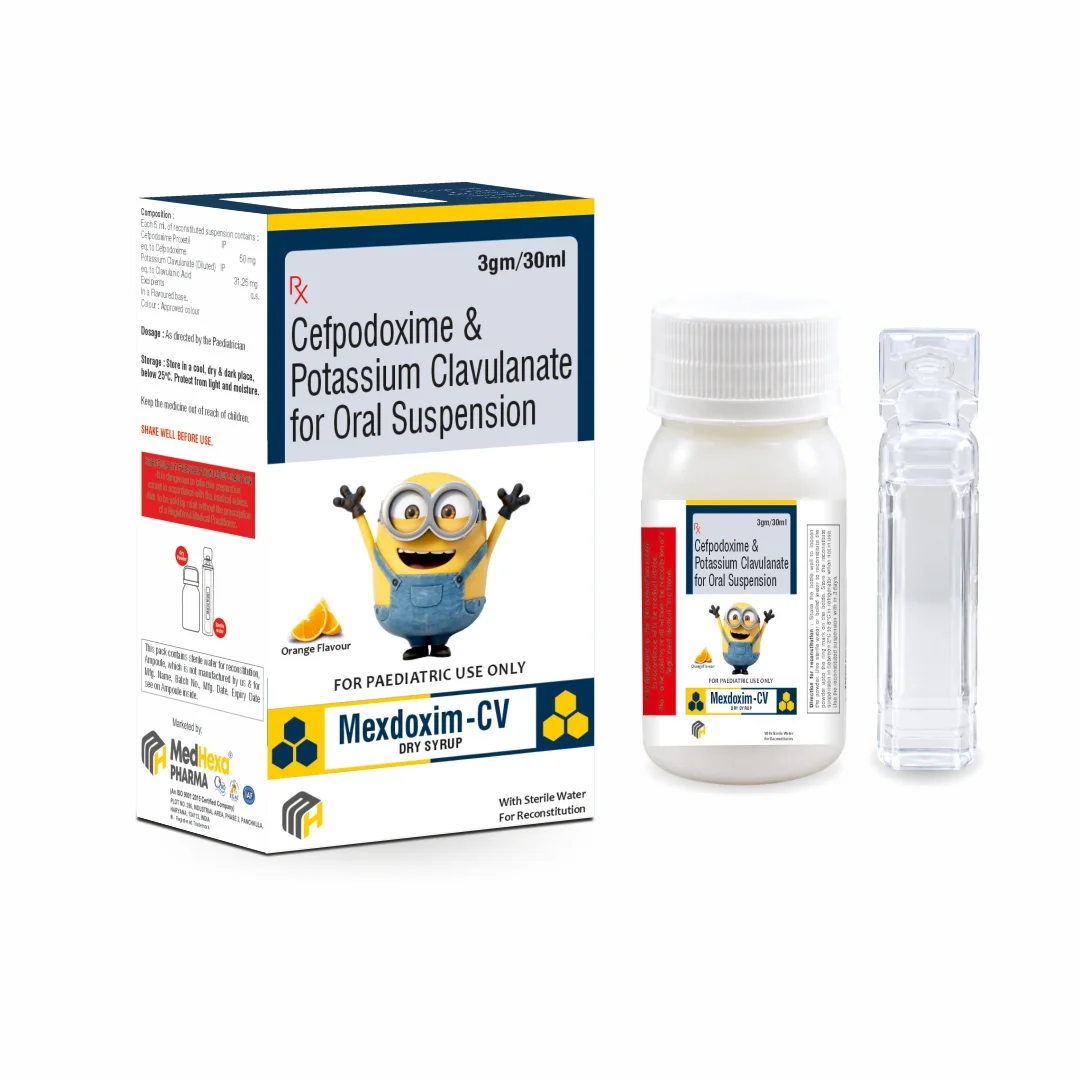
MEXDOXIM-CV contains Cefpodoxime Proxetil I.P. 50 mg and Potassium Clavulanate I.P. 31.25 mg per 5 mL of reconstituted suspension. This combination brings together cefpodoxime, a third-generation cephalosporin antibiotic, and clavulanate, a beta-lactamase inhibitor. Together, these ingredients provide antibacterial activity against selected susceptible organisms.
MEXDOXIM-CV comes in a Dry Syrup formulation with a 30 mL pack. Therefore, it offers an oral option for patients who need liquid antibiotic therapy. Cefpodoxime has established clinical use in selected bacterial infections involving the respiratory tract, sinuses and middle ear.
For related formulations and therapeutic segments, explore the Medhexa Pharma Products range.
Therapeutic Segment
Antibiotics | Third-Generation Cephalosporins | Beta-Lactamase Inhibitors | Dry Syrups | Pediatric Anti-Infective Care
Uses of MEXDOXIM-CV
MEXDOXIM-CV may help manage selected bacterial infections when a healthcare professional considers this combination appropriate. These clinical applications include:
- Acute bacterial sinusitis
- Community-acquired pneumonia
- Acute bacterial exacerbation of chronic bronchitis
- Acute otitis media
- Selected bacterial respiratory infections
- Other susceptible bacterial infections according to clinical assessment
Cefpodoxime oral suspension has established use for acute otitis media, acute maxillary sinusitis and community-acquired pneumonia in appropriate pediatric patients. It also has established uses for acute bacterial exacerbations of chronic bronchitis in appropriate patients.
However, antibiotics do not treat viral infections. Therefore, patients should use MEXDOXIM-CV only when a healthcare professional identifies or strongly suspects a bacterial infection.
Key Benefits of MEXDOXIM-CV
- Contains Cefpodoxime Proxetil 50 mg and Potassium Clavulanate 31.25 mg per 5 mL after reconstitution.
- Combines a third-generation cephalosporin antibiotic with a beta-lactamase inhibitor.
- Provides antibacterial activity against susceptible organisms.
- Supports treatment of selected bacterial respiratory infections.
- Helps address selected bacterial sinus and ear infections.
- Offers an oral dry-syrup formulation for patients who need liquid medication.
- Provides a convenient dosage form for appropriate pediatric antibiotic therapy when prescribed according to age and body weight.
Moreover, cefpodoxime has documented activity against several susceptible bacterial organisms that cause respiratory and ear infections.
How MEXDOXIM-CV Works
First, the body converts Cefpodoxime Proxetil into active cefpodoxime after oral administration. Cefpodoxime then interferes with bacterial cell-wall synthesis. As a result, susceptible bacteria lose the ability to maintain their cell-wall structure and may die.
Meanwhile, Clavulanate targets certain beta-lactamase enzymes that bacteria produce. These enzymes can reduce the activity of some beta-lactam antibiotics. Therefore, clavulanate can help protect the antibacterial activity of susceptible beta-lactam antibiotics against certain beta-lactamase-producing organisms.
Consequently, the two components provide complementary antibacterial activity. However, the combination does not overcome every type of bacterial resistance, so healthcare professionals should consider the suspected organism and local resistance patterns when selecting treatment.
Common Side Effects of MEXDOXIM-CV
MEXDOXIM-CV may cause side effects in some patients. Common reactions can include:
- Diarrhea
- Nausea
- Vomiting
- Abdominal discomfort
- Headache
- Indigestion
- Skin rash
Most reactions remain mild. However, severe diarrhea can require medical evaluation because antibiotic treatment can sometimes lead to Clostridioides difficile-associated diarrhea.
In addition, serious allergic reactions can occur, particularly in patients with a history of severe reactions to cephalosporins or other beta-lactam antibiotics.
Important Safety Information
Use MEXDOXIM-CV only according to the prescription and advice of a qualified healthcare professional.
First, tell your doctor about any previous allergy to cefpodoxime, cephalosporins, penicillins or other beta-lactam antibiotics. Such patients may face a higher risk of allergic reactions.
Moreover:
- Do not use the medicine if you have a known serious allergy to cefpodoxime or any component of the formulation.
- Seek urgent medical attention if you develop breathing difficulty, facial swelling, severe rash or other signs of a serious allergic reaction.
- Do not use antibiotics for common viral infections such as uncomplicated colds or influenza.
- Complete the prescribed treatment course unless your healthcare professional advises you to stop.
- Report severe or persistent diarrhea during or after treatment.
- Tell your doctor about all medicines and supplements you currently take.
- Patients with significant kidney impairment may require dosage adjustment.
- Avoid unnecessary antibiotic use because it can contribute to antimicrobial resistance.
Furthermore, cefpodoxime prescribing information recommends a longer dosing interval for patients with severe renal impairment.
Dosage & Administration
The healthcare professional determines the appropriate MEXDOXIM-CV dose according to the patient’s age, body weight, infection, severity, kidney function and clinical response.
For children, cefpodoxime dosing commonly follows body weight rather than a fixed adult dose. Current prescribing information lists 10 mg/kg/day divided every 12 hours, with maximum daily limits that vary by infection. For acute otitis media and acute maxillary sinusitis in children 2 months through 12 years, the labeling lists 5 mg/kg every 12 hours, subject to maximum dose limits.
Therefore, parents or caregivers should not calculate the dose from the 30 mL bottle size. Follow the exact prescription and measuring instructions provided by the healthcare professional.
Directions for Reconstitution
MEXDOXIM-CV contains dry powder, so prepare the suspension before giving the medicine.
First, check the manufacturer’s label or package insert for the exact quantity of water required. Then:
- Add the specified amount of water.
- Shake the bottle thoroughly to create a uniform suspension.
- Use the supplied measuring device or a calibrated oral syringe.
- Shake the bottle well before every dose.
- Follow the manufacturer’s storage instructions after reconstitution.
The exact water volume can vary between manufacturers and bottle designs. Therefore, always follow the reconstitution instructions printed on the MEXDOXIM-CV pack rather than estimating the amount of water.
Storage
Before reconstitution, keep MEXDOXIM-CV according to the manufacturer’s labelled storage conditions and protect the powder from moisture.
After reconstitution, follow the storage instructions provided with the specific product. Keep the bottle away from excessive heat and direct sunlight, and keep it out of reach of children.
Moreover, check the product label for the recommended in-use period after reconstitution and discard the suspension after that period.