
PCD Pharma Franchise Segments in India (2026): Full List and How to Choose the Right One
Table of Contents
- Quick Answer: What Are the PCD Pharma Franchise Segments?
- What Are PCD Pharma Franchise Segments?
- PCD Pharma Franchise Segments List: Therapeutic Segments
- How Much to Stock: A Simple Reorder Formula
- Which PCD Franchise Segments Are Most in Demand?
- Operational PCD Pharma Franchise Segments (Franchise Types)
- PCD Pharma Franchise Segments Compared
- Questions to Ask Before You Choose a Segment
- Licence and Compliance Basics
- Common Mistakes When Choosing a Segment
- Frequently Asked Questions
- Key Takeaways
Choosing among PCD pharma franchise segments is one of the first decisions a new partner makes, and it shapes everything that follows: which doctors you visit, which products you stock and how your first year looks. This guide gives you the full PCD pharma franchise segments list for India, covering both therapy segments and franchise types, and helps you match them to your own background.
It is a practical overview, not financial advice. Demand varies by territory, so use it as a starting point and then check your local market.
Quick Answer: What Are the PCD Pharma Franchise Segments?
PCD pharma franchise segments fall into two groups. Therapeutic segments include general, antibiotics, cardiac-diabetic, derma, gynae, paediatric, ortho, neuro-psychiatry, eye care, ayurvedic, critical care and veterinary. Operational segments are monopoly, product-wise, state-wise and multi-specialty. Choose the segment where you already know the prescribers or the chemists, and start with one or two before adding more.
What Are PCD Pharma Franchise Segments?
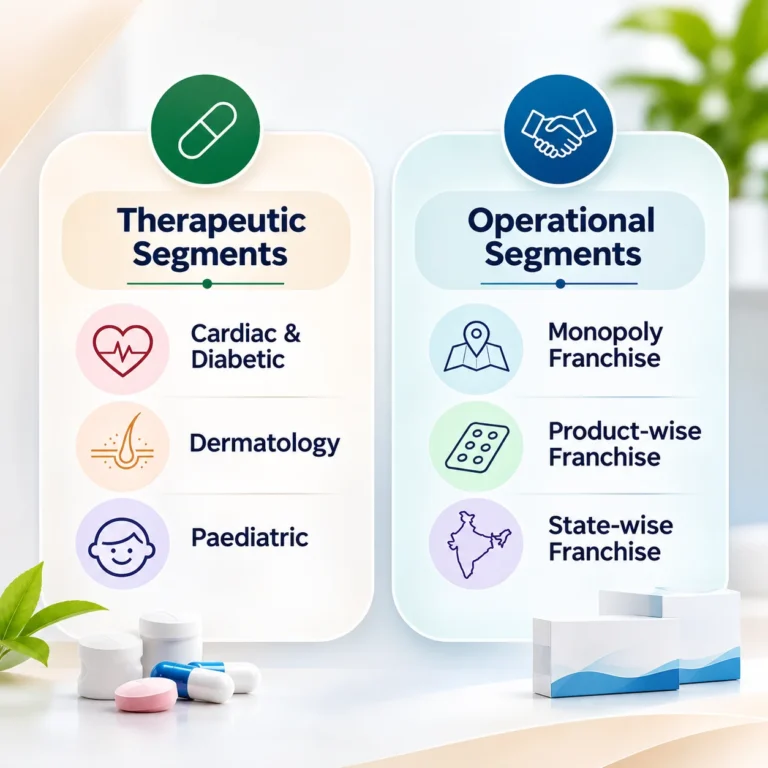
PCD stands for Propaganda cum Distribution. The company supplies branded products, and you promote and distribute them in an agreed territory. Within this model, PCD pharma franchise segments are of two kinds:
- Therapeutic segments: the type of medicine, such as cardiac-diabetic, dermatology or paediatric.
- Operational segments: how the franchise is structured, such as monopoly, product-wise or state-wise.
- You choose one or more of each. A partner might, for example, take a monopoly franchise for one district in the derma and gynae segments.
PCD Pharma Franchise Segments List: Therapeutic Segments
General Range and Antibiotics
This is the everyday range: antibiotics, pain relief, fever, gastro and vitamins. Demand is steady and the prescribers are general physicians, so it suits partners who serve many small clinics and chemists. Competition is also high, so product quality and delivery matter. See the Medhexa Pharma general range.
Cardiac and Diabetic
This segment covers chronic care such as blood pressure, sugar control and cholesterol. Patients take these medicines for long periods, which means repeat purchases. Prescribers are physicians, diabetologists and cardiologists. Explore the Cardries Biotic cardiac-diabetic division.
Dermatology (Derma)
A derma PCD franchise covers creams, ointments, lotions and oral products for skin conditions. It is a specialist segment, so relationships with dermatologists matter most, and some products are seasonal, with higher demand in winter for dry skin. See Lumiora Dermacare.
Gynaecology
Gynae covers women’s health, including supplements and prenatal care. Prescribers are gynaecologists, and the segment rewards patient trust and consistent supply. See Gynexa Wellness.
Paediatric
Paediatric products include drops, dry syrups and chewable tablets, and demand rises in the cough-and-cold season. Prescribers are paediatricians, and dosage form and taste matter. Rules on children’s medicines can change, so read our guide on the FDC warning for PCD partners. See Medpedia Junior Care.
Neuro-Psychiatry
This segment covers neurological and mental health conditions. Treatment is long-term, but some products fall under additional controls, so licence and record-keeping need extra care. See the Bravora neuro division, and our sister brand Neuark Pharmaceutical.
Eye Care
Eye care includes eye drops and related products. Prescribers are ophthalmologists and general doctors, and the range is compact. See Optlink eye care.
Ayurvedic and Nutraceutical
An ayurvedic PCD franchise covers herbal products, supplements, protein products and tonics. It appeals to patients who prefer natural options, and regulations differ from allopathic medicines. See Prithyur Veda.
Critical Care and Injectables
Critical care covers injectables and hospital-use products, so buyers are hospitals, nursing homes and institutional chemists. Orders are fewer but need more careful handling, storage and compliance. See Medhexa Critical Care.
Orthopaedic and Pain Range
Ortho includes joint, bone and pain products, with demand from orthopaedic doctors and physicians. Ask your company whether it offers this range before you plan around it.
Veterinary
Veterinary products serve animal clinics, farms and dairies, and the buyer base is different from human medicine. See Vetedix Healthcare.
Which PCD Franchise Segments Are Most in Demand?
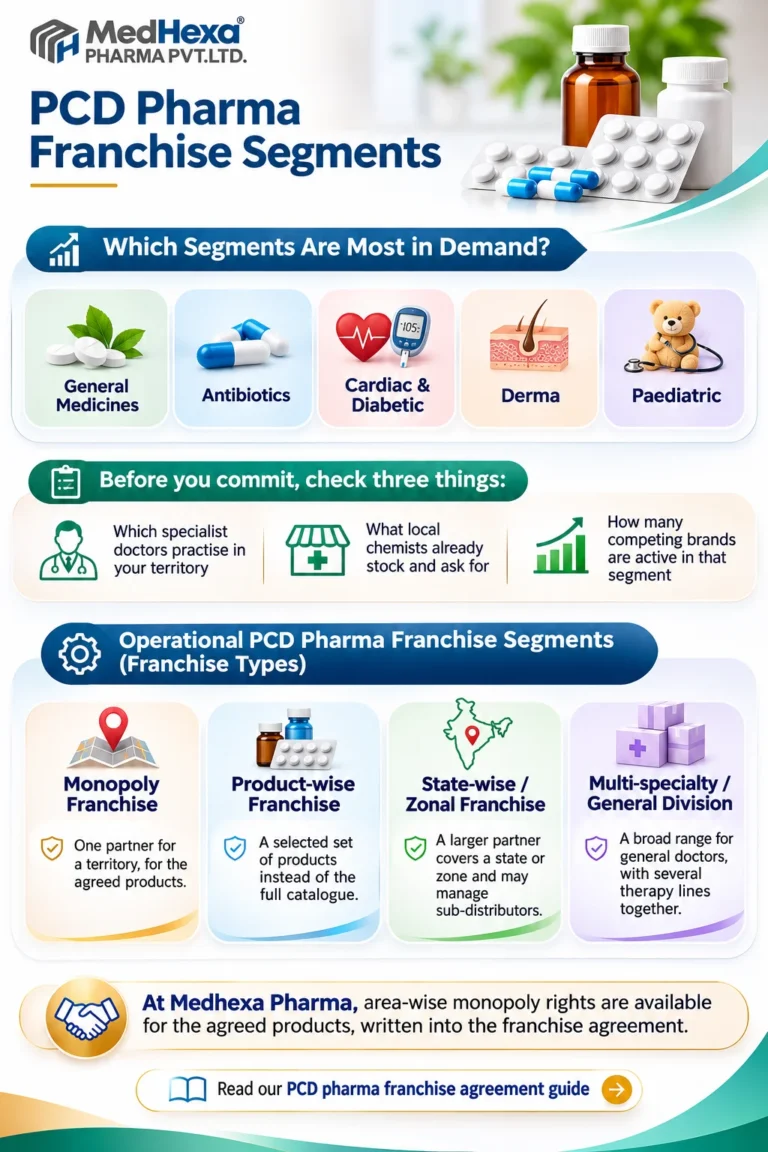
Many industry guides cite general medicines, antibiotics, cardiac-diabetic, derma and paediatric lines as high-volume segments, because they match common prescriptions or chronic needs. Demand is local, though. A segment that sells well in one district may be weak in the next.
Before you commit, check three things:
- Which specialist doctors practise in your territory
- What local chemists already stock and ask for
- How many competing brands are active in that segment
Operational PCD Pharma Franchise Segments (Franchise Types)
Beyond therapy, companies structure the franchise in different ways. Ask which of these a company offers:
- Monopoly franchise: the company appoints one partner for a territory, for the agreed products. Rights should be written in the agreement.
- Product-wise franchise: you take a selected set of products instead of the full catalogue.
- State-wise or zonal franchise: a larger partner covers a state or zone and may manage sub-distributors.
- Multi-specialty or general division: a broad range for general doctors, with several therapy lines together.
At Medhexa Pharma, area-wise monopoly rights are available for the agreed products, written into the franchise agreement. Read our PCD pharma franchise agreement guide for the clauses to check.
PCD Pharma Franchise Segments Compared
| Segment | Main Prescribers | Demand Pattern | Best Fit For |
|---|---|---|---|
| General Range and Antibiotics | General Physicians | Steady, Seasonal Peaks | Partners with many clinics and chemists |
| Cardiac and Diabetic | Physicians, Diabetologists, Cardiologists | Chronic, Repeat | Partners who want steady repeat demand |
| Dermatology | Dermatologists | Seasonal and Chronic | Partners with skin specialist contacts |
| Gynaecology | Gynaecologists | Steady | Partners with women’s health contacts |
| Paediatric | Paediatricians | Seasonal | Partners with child specialist contacts |
| Neuro-Psychiatry | Neurologists, Psychiatrists | Chronic | Partners ready for extra compliance |
| Eye Care | Ophthalmologists | Steady | Partners focused on a compact range |
| Ayurvedic and Nutraceutical | Mixed | Steady | Partners with wellness-focused chemists |
| Critical Care | Hospitals, Intensivists | Order-Based | Partners serving institutions |
| Veterinary | Veterinarians | Seasonal | Partners in animal-farming areas |
Medhexa Pharma supplies syrups, dry syrups, paediatric suspensions, nasal sprays, respules, gargles, ointments and softgel capsules to PCD partners across India.
How to Choose the Right PCD Pharma Franchise Segment
Match the segment to what you already have.
- If you are an MR or ex-MR: start with the segment you have promoted, because you know its doctors. Our guide for PCD pharma franchise for MRs explains the next steps.
- If you are a chemist or distributor: start with fast-moving general and chronic lines that your customers already ask for.
- If your territory is rural: general, paediatric and veterinary lines often match local demand.
- If your territory is urban: derma, gynae and cardiac-diabetic usually have more specialist doctors.
- If your budget is small: take a product-wise or one-segment franchise first.
Acute vs Chronic: Why a Mix Helps
- Acute products, such as antibiotics and cough-cold medicines, sell fast but depend on the season. Chronic products, such as cardiac and diabetic medicines, sell more slowly but repeat every month. A mix of both keeps cash flowing through the year. For an example of seasonal planning, see our winter medicines stock list.
Questions to Ask Before You Choose a Segment
Ask every company, and get the answers in writing:
- Which segments and how many products do you offer?
- Do you give monopoly rights, and for which products?
- Can I start with a product-wise or single-segment franchise?
- Who manufactures the products, and what are the licence and GMP details?
- What are the minimum order, freight and payment terms?
- What promotional material do you provide for each segment?
Before you decide, read how to identify a genuine PCD pharma company, and see the PCD pharma franchise investment guide for the costs involved.
Licence and Compliance Basics
- A wholesale drug licence and GST registration are generally needed to stock and sell medicines in any segment. Some products, such as certain neuro-psychiatric medicines, may need additional permissions, so check with your State Drug Control office, or visit CDSCO for central rules. Our guide to the drug licence for a PCD franchise lists the documents.
Common Mistakes When Choosing a Segment
- Choosing the largest range instead of the one you can promote
- Picking a segment only because it sounds profitable
- Ignoring your own doctor and chemist contacts
- Starting with too many segments at once
- Skipping compliance checks for controlled products
- Not asking about the manufacturer
- Accepting segment promises without written terms
Tell us your territory and we will suggest segments in writing.
Tell us your city, your doctor or chemist contacts and the segments you are considering. Our team will share the product list, territory availability and franchise terms in writing.
Frequently Asked Questions
What are PCD pharma franchise segments?
They are the categories a PCD company offers: therapy segments such as cardiac-diabetic, derma and gynae, and franchise types such as monopoly or product-wise.
Which PCD pharma franchise segment is best for beginners?
The one you already know. Partners with doctor contacts in a specialty often start there, and others start with a focused general or chronic range.
Which PCD franchise segments are most in demand?
General, antibiotics, cardiac-diabetic, derma and paediatric lines are often cited as high-volume. Demand depends on your territory, so check local doctors and chemists first.
Can I take more than one segment?
Yes, many partners combine segments, such as general with cardiac-diabetic. Start small, and add segments once your first range is selling.
What is a monopoly PCD franchise?
It means the company appoints only one partner for your territory for the agreed products. Get the rights written in the agreement.
Is a product-wise franchise possible?
Many companies allow it. You take a selected set of products instead of the full catalogue, which can lower your first order.
Do I need a separate licence for each segment?
A wholesale drug licence and GST are generally needed for distribution. Some products may need additional permissions, so check with your State Drug Control office.
Does Medhexa offer monopoly rights?
- PCD pharma franchise segments include therapy segments and franchise types.
- Choose the segment where you already know the prescribers or chemists.
- A mix of acute and chronic products balances the year.
- Start with one or two segments or a product-wise franchise, then add more.
- Ask for monopoly rights, manufacturer details and terms in writing.
Key Takeaways
- PCD pharma franchise segments include therapy segments and franchise types.
- Choose the segment where you already know the prescribers or chemists.
- A mix of acute and chronic products balances the year.
- Start with one or two segments or a product-wise franchise, then add more.
- Ask for monopoly rights, manufacturer details and terms in writing.
Ready to choose your segment? Apply for a PCD pharma franchise, explore our PCD pharma franchise services, or learn about third party manufacturing if you want your own brand.
Disclaimer: This article is for general information and is not financial or legal advice. Demand and rules vary by territory. Please verify requirements with your State Drug Control office or a qualified consultant.