

How Humidity Affects Medicine Quality: Storage Tips Everyone Should Know
Have you ever noticed the label on a medicine box that says “Store in a cool, dry place”? While many people follow this instruction without giving it much thought, proper storage plays a crucial role in maintaining a medicine’s quality, safety, and effectiveness.
Humidity—or the amount of moisture in the air—is one of the biggest environmental factors that can affect medicines. Excess moisture can damage tablets, capsules, powders, and even liquid medicines, sometimes reducing their effectiveness long before the expiry date printed on the package.
This is especially important in countries like India, where high humidity during the monsoon season can expose medicines to conditions that may impact their stability if they are not stored correctly.
In this guide, you’ll learn how humidity affects medicine quality, why proper storage matters, common mistakes people make, practical medicine storage tips, and how pharmaceutical companies work to protect medicines from moisture throughout their shelf life.
What Is Humidity?
Humidity is the quantity of water vapor in the air, which varies from one time period to another based on the weather, climatic and geographic conditions.
For instance, in rainy seasons or areas adjacent to the sea, humidity is considerably higher compared to dry environments. While humidity affects weather conditions by making them warm or sticky, it can also affect medicines through altering the environment in which medicines exist.
This is because some pharmaceutical drugs have been produced under strictly controlled conditions of humidity and temperature, while others have been formulated for particular humidity and temperature. Once the medicines have been produced, the next step is storing them properly.
Why Does Humidity Matter for Medicines?
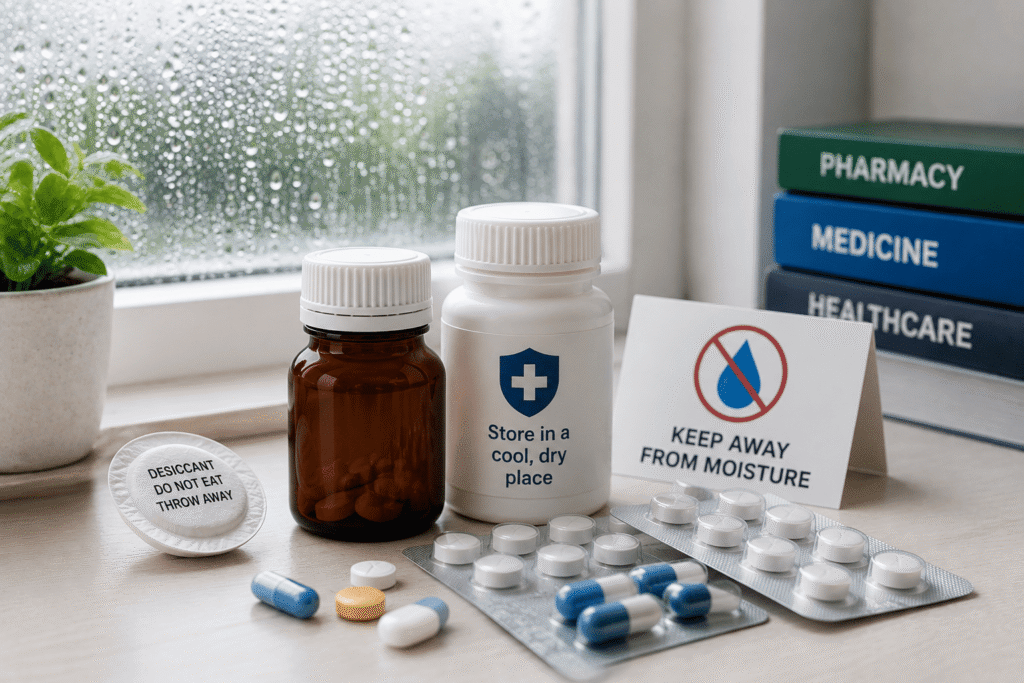
Medicines are carefully formulated to remain safe and effective throughout their intended shelf life. However, this depends on storing them according to the conditions recommended by the manufacturer.
When medicines are exposed to high humidity, they may absorb moisture from the surrounding air. This extra moisture can change the way certain medicines look, feel, dissolve, or perform. In some cases, it may reduce the medicine’s stability or cause visible changes such as swelling, softening, discoloration, or clumping.
Humidity can also affect the protective packaging designed to keep medicines safe. That’s why manufacturers invest in moisture-resistant blister packs, tightly sealed containers, and desiccants to help maintain product quality during storage and transportation.
Simply put, storing medicines in the right environment helps ensure they remain as effective and safe as they were when they left the manufacturing facility.
How Humidity Affects Medicine Quality
-
Tablets
Many tablets are designed to remain firm until they are swallowed. When exposed to excessive humidity, they may absorb moisture and become soft, swollen, crumbly, or difficult to handle. Moisture can also affect how quickly some tablets dissolve after being taken. Keeping tablets in their original blister packaging until they are needed helps reduce unnecessary exposure to humidity. -
Capsules
Capsules are often more sensitive to moisture than tablets. High humidity can cause capsule shells to become sticky, soft, or misshapen. In some cases, capsules may stick together or become difficult to separate from their packaging. Proper storage helps maintain the capsule's shape and integrity throughout its shelf life. -
Powders
Powder-based medicines can easily absorb moisture from the air. This may cause clumping, making it difficult to measure or mix the medicine as intended. Moisture exposure may also affect the product's overall quality. Keeping powder medicines tightly sealed after each use helps minimize moisture exposure. -
Liquid Medicines
Although liquid medicines already contain water or other liquids, they are still sensitive to improper storage. High temperatures and unsuitable environmental conditions can affect their stability over time. Always follow the storage instructions provided on the product label, as some liquid medicines may require refrigeration while others should be stored at room temperature.
Different types of medicines respond differently to moisture, but nearly all pharmaceutical products benefit from being stored in a cool, dry place.
Signs That Humidity Has Damaged Your Medicines
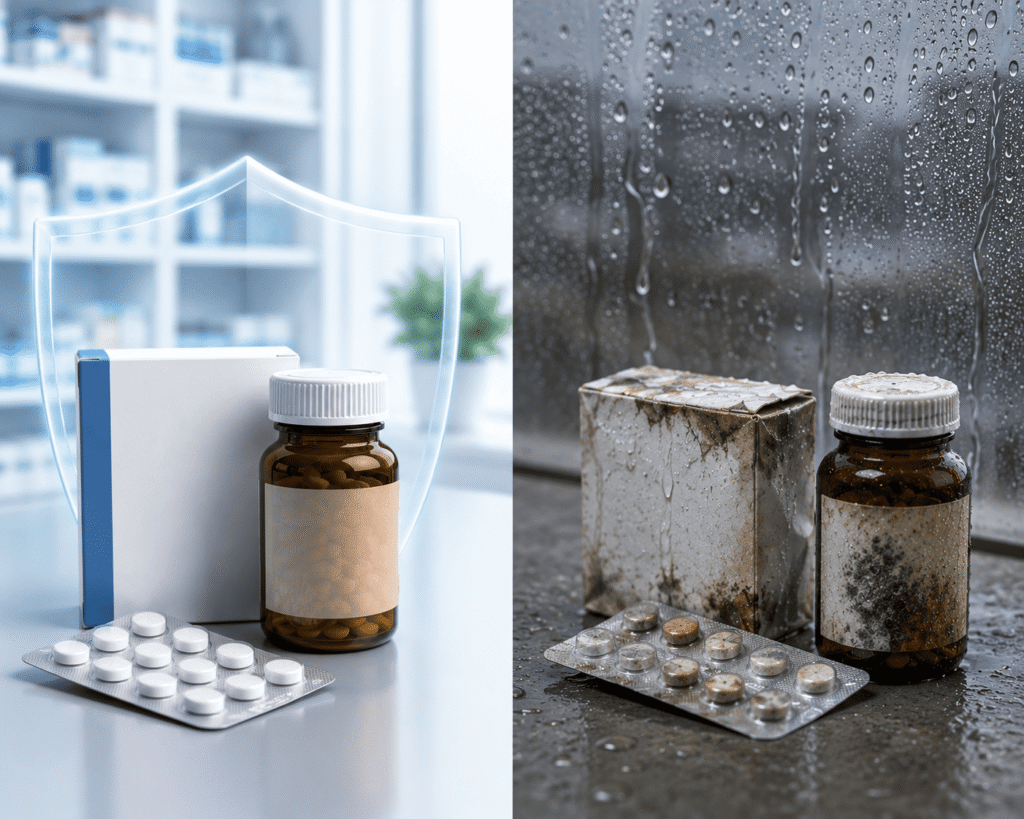
Humidity doesn’t always cause visible damage immediately, but over time it can affect the appearance, texture, and quality of certain medicines. While not every change means a medicine is unsafe, it’s important to pay attention to anything unusual before use.
Some common signs that moisture may have affected a medicine include:
- Tablets that have become soft, swollen, cracked, or crumbly
- Capsules that feel sticky, misshapen, or stuck together
- Powder medicines that have formed lumps or hardened
- Changes in the medicine’s color, smell, or texture
- Blister packs that appear damaged or allow moisture inside
- Labels that are wet, faded, or peeling due to damp conditions
If you notice any of these changes, avoid using the medicine until you have consulted a pharmacist or healthcare professional. Never assume that a medicine is safe simply because it has not reached its expiry date. Proper storage conditions are just as important as the expiry date in maintaining medicine quality.
Common Medicine Storage Mistakes
Many people unknowingly store medicines in places that expose them to unnecessary heat and humidity. Even when medicines are still within their expiry date, poor storage conditions may affect their quality over time.
Here are some of the most common mistakes to avoid.
Keeping Medicines in the Bathroom
Bathrooms are one of the worst places to store medicines. Daily showers create high humidity levels, and repeated exposure to moisture can affect the quality of tablets, capsules, and other dosage forms.
Storing Medicines in the Kitchen
Kitchens are another area where medicines are often exposed to heat, steam, and changing temperatures. Storing medicines near the stove, sink, or microwave can increase their exposure to moisture and heat.
Removing Medicines from Their Original Packaging
Original packaging is designed to protect medicines from light, moisture, and contamination. Transferring tablets or capsules into unlabelled containers or plastic bags can reduce this protection and increase the risk of confusion about dosage or expiry dates.
Leaving Medicine Bottles Open
After using a medicine, always close the bottle or container tightly. Even a small amount of moisture from the surrounding air can enter an open container and gradually affect the medicine.
Storing Medicines Near Windows
Direct sunlight and fluctuating temperatures near windows can reduce the stability of some medicines. A cool, dry cupboard away from direct sunlight is generally a better storage option.
Keeping Medicines Inside a Car
Cars can become extremely hot during summer and humid during rainy weather. These changing conditions may damage medicines if they are left inside the vehicle for extended periods.
Best Medicine Storage Tips Everyone Should Follow
Proper medicine storage is simple and can help maintain the quality and effectiveness of medicines until they are needed.
Follow these practical tips:
- Store medicines in a cool, dry place away from heat and humidity.
- Keep medicines in their original packaging until use.
- Close bottles and containers tightly after every use.
- Keep medicines away from direct sunlight.
- Store medicines out of reach of children and pets.
- Check expiry dates regularly and safely dispose of expired medicines.
- Read and follow the storage instructions printed on the medicine label.
- Avoid exposing medicines to unnecessary temperature changes.
- Do not mix different medicines in the same container.
- If refrigeration is required, follow the manufacturer’s instructions carefully and avoid freezing medicines unless specifically directed.
These simple habits can help preserve medicine quality and reduce the risk of accidental damage caused by improper storage.
1. How does humidity affect medicine quality?
Humidity can expose medicines to excess moisture, which may change their appearance, texture, or stability. Tablets may become soft or crumble, capsules can turn sticky, and powder medicines may form lumps. Following the recommended storage instructions helps maintain medicine quality and effectiveness.
2. Where is the best place to store medicines at home?
The ideal place is a cool, dry cupboard away from direct sunlight, heat, and moisture. Avoid storing medicines in bathrooms, kitchens, or near windows, where humidity and temperature can fluctuate.
3. Can medicines expire before their printed expiry date due to humidity?
The printed expiry date assumes the medicine has been stored according to the manufacturer’s recommended conditions. If medicines are exposed to excessive humidity, heat, or improper storage, their quality may be affected before the expiry date. If you notice any unusual changes in the medicine, consult a pharmacist or healthcare professional before using it.
4. Why do some medicine bottles contain silica gel or desiccant packets?
Silica gel or desiccant packets help absorb excess moisture inside the container, protecting medicines from humidity. They are not meant to be eaten and should always remain inside the bottle unless the product instructions say otherwise.
5. Is it safe to store medicines in the refrigerator?
Not all medicines should be refrigerated. Some medicines require refrigeration, while others should be stored at room temperature. Always follow the storage instructions provided on the medicine label or package, as incorrect refrigeration may affect medicine quality.
6. What should I do if my medicine gets wet or is exposed to moisture?
If a medicine becomes wet, sticky, discolored, swollen, or shows any other signs of damage, avoid using it. Seek advice from a pharmacist or healthcare professional, especially if you’re unsure whether the medicine is still safe or effective.
7. Why should medicines be kept in their original packaging?
Original packaging is specially designed to protect medicines from moisture, light, and contamination. It also contains important information such as dosage instructions, batch number, manufacturing date, and expiry date, helping ensure safe and correct use.
8. How can I protect medicines during the monsoon season?
During humid weather, keep medicines in a cool, dry place, close containers tightly after use, avoid storing them in bathrooms or kitchens, and leave desiccant packets inside medicine bottles when provided. Regularly inspect medicines for any signs of moisture damage before use.
Frequently Asked Questions (FAQs)
Looking for the Best Pharmaceutical Company in North India?
Partner with Medhexa Pharma Pvt. Ltd. for premium-quality pharmaceutical products, dependable supply, and professional business support.
Conclusion
Proper medicine storage is just as important as taking the right medicine. High humidity can gradually affect the quality, stability, and effectiveness of medicines, making it essential to store them according to the manufacturer’s instructions. Simple habits like keeping medicines in their original packaging, storing them in a cool, dry place, and protecting them from excess moisture can help maintain their quality throughout their shelf life.
At Medhexa Pharma, we understand that delivering quality healthcare goes beyond manufacturing medicines. It also means educating patients, caregivers, and healthcare professionals about safe medicine handling and storage practices. Our commitment to quality, innovation, and patient safety is reflected in every product we offer and every healthcare resource we create.
Whether you’re a healthcare professional, distributor, or someone looking for reliable pharmaceutical information, Medhexa Pharma is dedicated to supporting better health through high-quality pharmaceutical solutions and trusted healthcare knowledge.