

Seasonal Allergies in Children: Symptoms, Causes & Prevention (Complete Guide for Parents)
As a parent, it’s never easy to watch your child struggle with constant sneezing, itchy eyes, or a runny nose. Many parents assume these symptoms are caused by a common cold, but they may actually be Seasonal Allergies in Children. These allergies are very common and can affect a child’s comfort, sleep, school performance, and outdoor activities.
The good news is that seasonal allergies can usually be managed with the right knowledge, early identification, and proper medical guidance. Understanding what triggers allergies and knowing how to reduce your child’s exposure can make a significant difference.
In this complete guide, you’ll learn what seasonal allergies are, how to recognize the symptoms, what causes them, how they’re diagnosed, treatment options, practical home care tips, prevention strategies, and when it’s time to consult a doctor.
What Are Seasonal Allergies in Children?
Seasonal allergies occur when a child’s immune system reacts to substances in the environment that are normally harmless. These substances, known as allergens, appear during certain times of the year and trigger an allergic reaction.
When a child with allergies breathes in pollen or mold spores, the immune system mistakes them as harmful invaders. In response, it releases chemicals such as histamine, which causes familiar allergy symptoms like sneezing, itchy eyes, and a runny nose.
Unlike food allergies, seasonal allergies are not caused by eating certain foods. They are usually linked to changes in weather and plant growth during different seasons.
Although seasonal allergies can develop at almost any age, they are more commonly seen in school-aged children and may continue into adulthood if not properly managed.
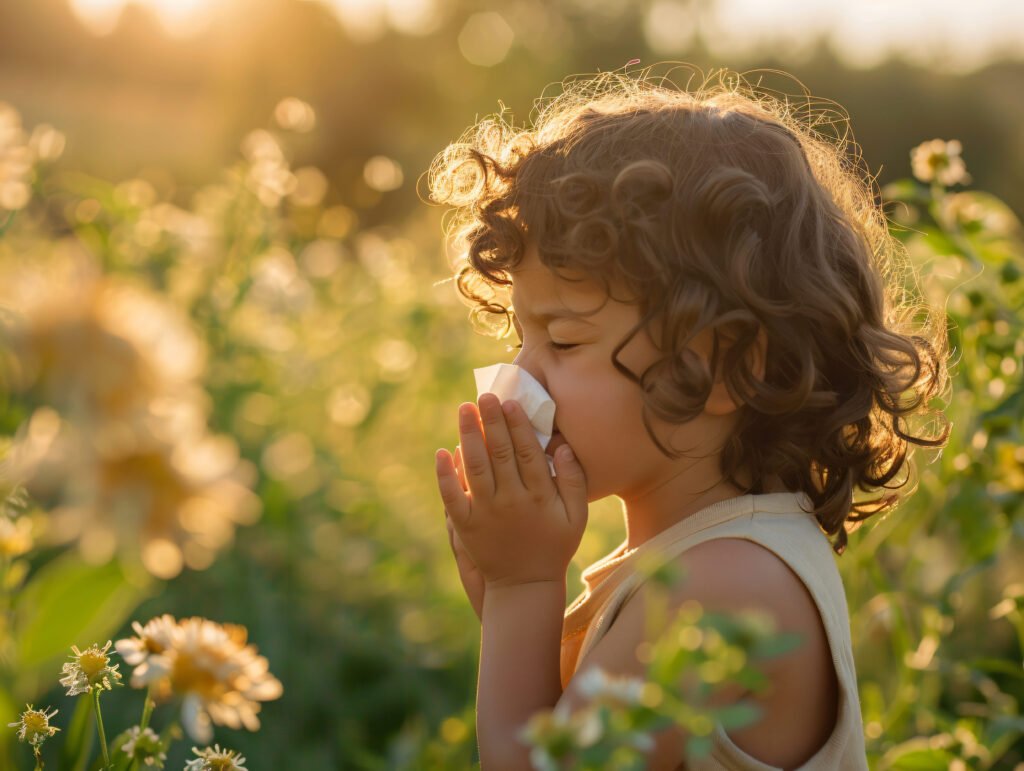
When Are Seasonal Allergies Most Common?
Different allergens become more active throughout the year.
-
Spring
Spring allergies are commonly triggered by tree pollen. As trees begin to bloom, pollen spreads through the air and can cause symptoms in sensitive children. -
Summer
Grass pollen becomes one of the biggest allergy triggers during the summer months. Children who spend more time playing outdoors may experience increased symptoms. -
Late Summer and Autumn
Weed pollen, especially from plants such as ragweed, becomes more common during this period. -
Rainy or Humid Weather
Damp conditions encourage mold growth, and mold spores can also trigger allergic reactions.
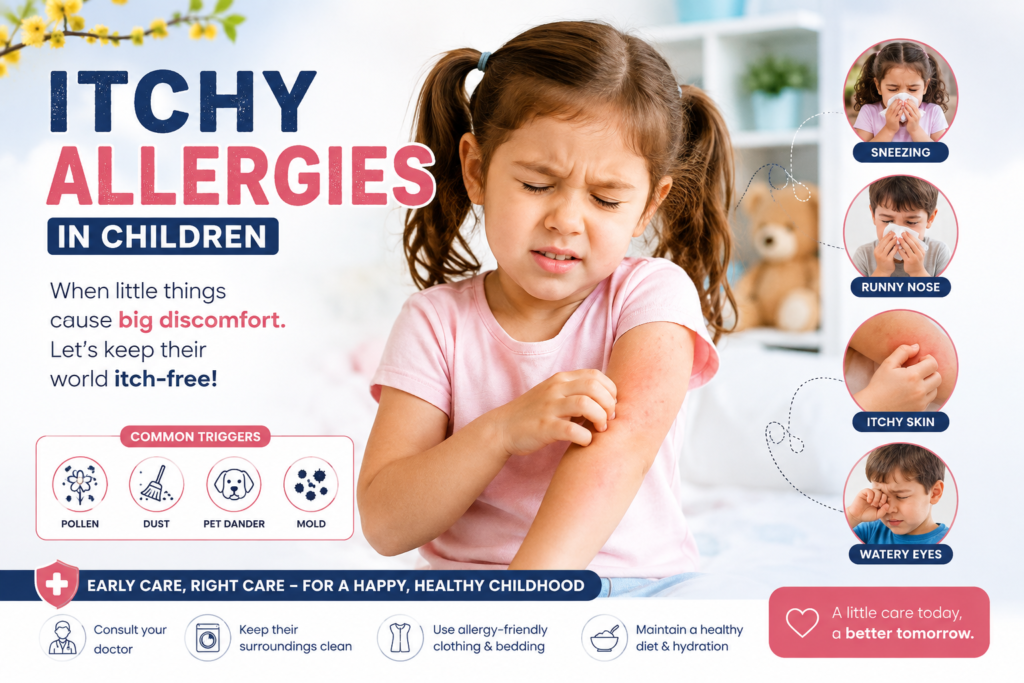
Common Symptoms of Seasonal Allergies in Children
Symptoms can range from mild to severe and may vary from one child to another.
Common signs include:
- Frequent sneezing
- Runny nose with clear mucus
- Stuffy or blocked nose
- Itchy nose
- Itchy, watery, or red eyes
- Itchy throat or ears
- Persistent dry cough caused by postnasal drip
- Dark circles under the eyes (“allergic shiners”)
- Mouth breathing due to nasal congestion
- Reduced sense of smell
- Fatigue because of disturbed sleep
Some children may also experience worsening asthma symptoms if they already have asthma.
One important clue is that allergy symptoms often continue for weeks or months, especially during allergy season.
What Causes Seasonal Allergies in Children?
Seasonal allergies are caused by exposure to airborne allergens rather than bacteria or viruses.
-
Tree Pollen
Trees release pollen during spring. Common pollen-producing trees include oak, birch, cedar, and pine. -
Grass Pollen
Many types of grasses release pollen throughout late spring and summer.. -
Weed Pollen
Weeds produce pollen during late summer and early autumn. -
Mold Spores
Outdoor mold grows in damp leaves, soil, compost piles, and humid environments.
What Causes Seasonal Allergies in Children?
Seasonal allergies are caused by exposure to airborne allergens rather than bacteria or viruses.
Seasonal Allergies
- No fever
- Itchy eyes and nose
- Clear, watery nasal discharge
- Symptoms last for weeks
- Triggered by allergens
- Not contagious
Common Cold
- Fever may occur
- Usually no itching
- Thick yellow or green mucus may develop
- Usually improves within 7–10 days
- Caused by viral infection
- Contagious
Can Seasonal Allergies Affect Daily Life?
Yes, seasonal allergies can have a significant impact on a child’s daily life, especially if symptoms are not managed properly. Constant sneezing, a blocked or runny nose, itchy eyes, and poor sleep can leave children feeling tired, irritable, and less able to focus in school. They may avoid outdoor play, sports, or other activities they usually enjoy because their symptoms become worse outside. In some children, seasonal allergies can also trigger or worsen asthma symptoms, making breathing more difficult during allergy season. Recognizing the signs early and following appropriate prevention and treatment strategies can help children stay active, sleep better, and enjoy their everyday routines with greater comfort.
Looking for the Best Pharmaceutical Company in North India?
Partner with Medhexa Pharma Pvt. Ltd. for premium-quality pharmaceutical products, dependable supply, and professional business support.
Conclusion
Seasonal allergies are a common part of childhood, but they don’t have to interfere with your child’s happiness or daily routine. By recognizing the symptoms early, understanding the common triggers, and following practical prevention measures, parents can help children stay healthier and more comfortable throughout allergy season.
Remember that every child is different. If symptoms persist or begin affecting your child’s sleep, school, or overall well-being, consult a qualified healthcare professional for an accurate diagnosis and personalized treatment plan.
At Medhexa Pharma, we believe that healthy children build healthier communities. We are committed to supporting quality pediatric healthcare through trusted pharmaceutical manufacturing, high-quality standards, and a focus on child wellness. Explore our pediatric healthcare range and learn more about our commitment to improving children’s health through quality-driven healthcare solutions.